Sunday, November 30, 2008

a memorial for the great depression:

Patriot Radio 1939:
During the roaring twenties, the New York Stock Exchange was the largest stock market in the world. However, in October 1929, NYSE had undergone the Great Wall Street Crash, which was the most devastating stock market crash in the history of the United States, resulting in a depression.
Trying to keep our nation’s outlook o
n the United States optimistic during the rough years of the Great Depression, Norman Bel Geddes designed the Patriot Radio in 1939. His intent for the radio was to be an emblem of American technology, industry, and identity. Geddes encased the patriot radio with a stars-and-stripes motif, in hopes to bolster people’s spirits.
So with that, where else would the patriot radio fit so perfectly other than on Wall Street in New York City, righ
t inside the Stock Exchange building. After all, this would be right in the center of where everything happened in the 20’s, and rightfully, would have the most meaning at this location.

Similar place: The Patriot Radio could easily be placed at our nations capitol, Washington D.C. in any of the memorial buildings. The radio’s patriotic motif would fit perfectly at any of these locations. With the purpose of the radio being optimism for our country and it’s future. It can almost be seen as a memorial itself in a sense, used to remember the hard time during the Great Depression.

Contrasting place: The Patriot Radio really should not be placed in any non-industrialized country. The stock market crash of 1929 mainly affected the industrialized states, hence the little importance it would have anywhere else.


http://i.ehow.com/images/GlobalPhoto/Articles/2324800/CAPITAL-CONCERTS-CA-main_Full.jpg

Sources:
http://www.nyse.com/
http://en.wikipedia.org/wiki/Wall_Street_Crash_of_1929
http://imagecache2.allposters.com/images/pic/ROS/SPL3155~Wall-Street-Crash-Posters.jpg

Power and Prestige II (Jayson Parker)


After having been designed for and owned by one of the richest men in the world, the Herter Brothers Library table has now found its way into a powerful lawyer’s office, who will soon have the chance to run for the senate. This office is located in the Empire State Building in Manhattan, NY where it symbolizes power and prestige. It is appropriate for the table to be located within one of the most powerful and prestigious cities in the world, which is New York City. Power and prestige are not the only attributes that the table and N.Y.C have in common. New York City started off as trading port and after World War II moved on to become one of the leading cities in the world through Wall Street, the united nations headquarters and by becoming the center of the art world. Similarly, the Herter Brothers started of as furniture makers and soon became one of the most influential and prominent designers in New York City. As a result of their flourishing company, the interior design and furniture industry flourished resulting in well made furniture and design all throughout the country. Simultaneously, the financiers and industrialists were taking advantage of these services and redefining the standards of luxury in the home.
Meanwhile in High Point, North Carolina the furniture market is being born and is also making itself known. Part of this movement is a direct result of the increased interest in interior design and furniture, which the Herter Brothers helped develop. This caused thousands of jobs to be brought into existence because of the influx of interest in furniture and design. This interest provoked designers to try and bring design to the masses, just as we have seen all throughout history.
As one zooms out and observes all that is taking place, it can be clearly seen that the Herter Brothers and their Library table, no matter how small, played a large role in the development of the interior design industry. They designed interiors for some of the most powerful and wealthiest people; people that are looked up to and admired. Thus the Library table still sits today in a prominent lawyers office in the Empire State Building in Manhattan, NY. It was here that the Library table was made and it is here that it has returned, to its rightful place of power and prestige harkening back to its history while maintaining its glory in the present.

Manxman Piano by MH Baillie Scott (Place)

The place for MH Baillie Scotts Manxman piano resides at the Graylyn Estate in Winston-Salem, N.C. Traditionally, Winston-Salem is associated with the textile, furniture, and tobacco industries, but is attempting to attract new businesses in the nanotech, high-tech and bio-tech fields. Also, it is the location of the corporate headquarters such as, R. J. Reynolds Tobacco Company, Krispy Kreme Doughnuts, Inc., BB & T, TW Garner Food Company, HanesBrands, Lowes Foods Stores, Southern Community Bank and ISP Sports. Winston-Salem first came about by the simple act from the United States Post Office to combine the two towns mail offices. Simple changes such as this shows that things will alter and adjust based on citizens needs and wants. Americans tend to know what they want, or think they know, so designers must base their designs off the demands of the costumers with considerations of the environment. The piano was a new concept of the 1890’s due to the fact that the piano was generally complex with many carved embellishments and MH Baillie Scott had downsized it into a more eco-friendly, space-saver, which is very contrary, to Graylyn Estate, an oversized home from the 1930’s. However, people alter and change, the purpose, use and size of things to better accommodate others needs and wants. Changes over time include, electronic sizes and capabilities, usage of new materials in buildings and textile goods and just about every aspect of design. The Manxman piano is another example of revolving designs through time. Now it is our job to take what has been done and alter designs to help us grow in a sustainable fashion. (http://www.visitwinstonsalem.com/)

Thoughtful

fortpierceacademy.com/ urban1.htm

Seriously?

www.podcastingnews.com

View of Winston-Salem

www.rentacomputer.com/rentals/States/Cities/North%20Carolina-Winston-Salem.asp

Compare: Power and Prestige II (Jayson Parker) is similar to Winston-Salem through the large developed companies and the development of art in Winston-Salem as to New York City, these two cities may not be at the same scale but are on the same page.

Contrast: Place for a Tiki Lamp is much different than Winston-Salem being that the southwest states such as California and Nevada culture, lifestyles and view differ greatly from the southeast.


The Golden Bed in a Community

Notting Hill Townshouses

Victorian Styled shopping centers in Kensington

The Golden Bed is located in Kensington, London. Kensington is a district of West London. In particular, the Tower House, in which the Golden Bed is situated, is located in Melbury Road, known as West Kensington. West Kensington's residential area primarily consists of Victorian styled terraces. Most of the residences include large bay windows as well as thin, and tall windows. This reflects the design of the exterior of the Tower House, while the interior is of a new kind of medieval style. Kensington is a busy commercial center with many shops, declaring it Londons second best shotting street.
It would be nice for this piece of furniture to stay within the city of London, but move to a separate district. One that is completely different is Notting Hill. Notting Hill Borders North Kensington and has a entirely separate style than other districts. It is located at the North- western corner of Hyde Park. It is a cosmopolitan district known for its fashion. This area is a more up-to-date version of West Kensington, the residences are terraces of large Victorian townhouses. While the main street is compiled of high-class shopping and restaurants. In the 19th century, the district set out to become a fashionable suburb of the capital. In the urban design of this upcoming district, houses were positioned adjacent to parks, making is so that the residences had access to a communal park, and the street could no longer see the park. This location is a great place for the Golden Bed to call its new home because it keeps to the original Victorian style house, but also develops on the idea that William Burges had for his bed; and that is taking an old style such as medieval or Victorian and developing it in a way so that it becomes your own style.

Gensler Architectural Firm : Tizio Lamp

Architecture designed by Gensler Architectural Firm. This is the Civic Plaza in an airport located in Indianapolis.
These are the Tameer Towers located in Abu Dhabi, and Arabian City.

Gensler Architectural Firm located all around the United States is number one out of the top one-hundred and fifty architectural firms, states Architectural Record. As architects, designers, planners and consultants, they partner with clients on about 3,600 projects every year. These projects can be as small as a wine label or as large as a new urban district. With more than 2,800 professionals networked across 31 offices, we serve our clients as trusted advisors, combining localized expertise with global perspective wherever new opportunities arise. Sustainability is something Gensler strives to achieve in their architectural designs. They believe that design is one of the most powerful strategic tools for securing a lasting competitive advantage. Gensler keeps more than 1,500 active clients varying from public and private, large and small, and profit or non-profit. As they have grown and expanded over the years they have worked out enough resources to provide 24-7 expertise delivering clients no matter what the project regards in size, complexity, or location. With as many clients Gensler has each architect in the firm is provided with a Tizio Lamp designed by Richard Sapper. It is designed with two counterweights that allow the user to direct light wherever it is needed most. You just push or pull with the touch of your hand to guide the light where it is needed. Great for those late nights in the office, especially the night shit that make 24-7 hour service able.

Compare-Contrast:
Although the Candelabrum is designed to light a room as well as the Tizio lamp, the Candelabrum is a much more intricate gorgeous artifact. It was designed for beauty and light. In contrast to the Tizio where it is designed for practicality instead. The lava lamp is similar to the Tizio lamp being two lamps that have new uses and ideas for lighting. Lava lamps have colored liquid and melted wax that warms up and moves around because of the heat created by the lamp. Tizio lamp was one of the first lamps to have a counterweight system and a halogen light bulb.

Sources:
Architectural Record
Gensler Architecural Firm
Design Within Reach

Place for Macintosh 512K

The Macintosh 512K is one of the older computers invented by Apple. Because of these old discoveries and inventions, we have such remarkable technology today, by making immense improvements from the past. Valuable history such as the evolution of computers should be kept so that people can see and appreciate the progression we’ve come along.
Currently, the Macintosh 512K is placed at the Computer History Museum, located in Mountain View, California. The mission of this museum is to “preserve and present for posterity the artifacts and stories of the information age.” They also mention that the museum “plays a unique role in the history of the computing revolution and its worldwide impact on the human experience.” The reason this place serves its purpose is so individuals can understand how the technology has come about today. The Computer History Museum is one of the largest museums in the world preserving computing artifacts.

Similar place: The University of Virginia’s Computer Museum serves the same purpose as the Computer History Museum in California. Although the Museum at UVA is much smaller compared to the Computer History Museum, it allows viewers to see computer-related artifacts that are both historical and modern.

Contrasting place: Placing it in a residential home during the 1980’s would serve its purpose of a computer. However, having the Macintosh 512K in a home does not serve the same purpose as having it in a museum where it gives out valuable information to viewers, teaching them about our history and advancements.
Computer History Museum (Mountain View, California)

A Place for the Chinese Umrella Holder: The Summer Palace

The "Garden of Nurtured Harmony" or Summer Palace, located about ten miles from Beijing dates back to the Jin Dynasty (1115-1234). In 1750 Emperor Qianlong requested designers and landscapers to reproduce the many styles of gardens and palaces found around China to the Summer Palace, and in 1903 a final restoration took place making it China's largest royal park, and a place for royal families to rest and be entertained. Consequently, where royal families were found, so was the umbrella holder, which provided a fancy way for the wealthy a place to store their wet umbrellas.
The 725 acre Palace, situated around Kunming Lake, features pavilions, temples, bridges, ancient Chinese art, over 3,000 structures and many winding paths through the dense landscape and gardens. "Guided by nature" visitors can feel the tranquility and detail given to the gardens layout. Along with magnificent gardens, the Summer Palace presents many halls, such as the Hall of Dispelling Clouds, where birthdays and special occasions were celebrated. It is here that the northern and southern garden styles of China, individually are blended together ideally to create harmony of man and nature.

Today the Summer Palace provides a relaxing getaway for domestic and international tourists, and is ranked one of the most noted and classical gardens of the world.

Compare: In comparison the umbrella holder would have also been found in Prince Gong's Palace, which also housed the royal Prince and the wealthy.

Contrast: Although many other gardens housed halls, palaces and temples the traditional Chinese gardens were not necessarily designed for royalty and the rich. Therefore, the umbrella holder would probably not be found in such common gardens.

http://www.travelchinaguide.com/cityguides/beijing/summer.htm
http://www.beijingguide2008.com/summer_palace_introduction/summer_palace.html


Gatewood and the Table Saw


The table saw which has been established as being in a wood shop, such as the one within our own Gatewood Studio Arts building. The Gatewood Studio Arts named after Maud Gatewood, an artist and alumna of the University of North Carolina at Greensboro. Openned for students to use in 2006 the building houses the art department and Interior Architecture department complete with art gallery, administrative offices, and workspaces. Down in the depths of the building is the wood shop. In the basement due to what it produces prototypes and near final product items. Objects made in the wood shop tend to not be very light and therefore a ground level entry way is much appreciated by the backs of students. It also places it into the background. The idea of a wood shop is a supporter for the design and building process and therefore doesn't command the building in the same way that the studio space does. Within the wood shop the table saw is one of the most commonly used tools within the space. Hence why it has been placed centrally within the wood shop. While space is limited in the building in general and especially so, the wood shop maintains the hierarchy of tools established by other wood shops. But within the The table saw once again takes center stage surrounded by its supporting members. The wood shop is used constantly and the table saw doubly so, as wood must be cut down into smaller pieces before it can be fed into some of the other devices. The sounds of saw blade spinning echoes through the concrete corridors of the Gatewood building, signifying the advancing prototype of a student’s project, or perhaps an entire studios class work culminating into a grand spectacle to shape the ages.

Sources:
http://www.uncg.edu/ure/news/stories/2006/April/GatewoodBuilding042506.htm
http://www.hsmm.aecom.com/MarketsAndServices/55/35/index.html

Place for a Tiki lamp

Palm Springs, as well as the Yucca Valley area had a very large infusion of this form of culture in the mid to late twentieth century.

The Mai Tai, a perfect example of the remnants of the Tiki Movement in America.


Considering the cultural implications this artifact, the tiki lamp, embodies, there are few locations where this cultural movement would have been evident, and would have been evident through the use of such artifacts. One major location was the American south west. After the second world war, many servicemen returned home carrying tales and souvenirs of grass skirt clad natives and their peculiar culture, music, and food. Due to their familiarity with this indigenous lifestyle, Polynesian design became infused into the local design styling of architecture, furniture, food, as well as music. This gave rise to the tiki movement or what has come to be called “Polynesian Pop” which lasted from the late 1940’s all the way into the 1970’s, particularly on the west coast.
The restaurant industry kept this pacific theme alive for many years, also the baby boomers of the 1950’s, having grown up as children of the original proponents of tiki design, the service members themselves, continued this culture on in the United States. The Southwest, particularly the states of California, Nevada, and Texas have seen the great majority of this movement. When all the sailors, Marines, and soldiers returned from service in the south Pacific, they returned to ports and harbors in Hawaii, and then to California. While many returned to their native hometowns, a large portion stayed in the region and set up businesses, and homes being styled or themed in this exotic fashion.
Remnants of this design and cultural movement are still evident to this day in areas such as the coastal regions of California, as well as farther inland to Yucca Valley.


http://retrorenovation.com/2008/06/01/an-asian-tiki-timeline-from-the-la-times/

A place replaced


The Wooden bed marks the transitional point of design in furniture. Design evolved from being highly decorative with multiple designs and decoration. This simple wooden bed made of plywood was placed by me in a boy’s room of a single family house. I believe that this bed belongs in that space because it is really simple and does not look like a girl bed. This artifact is now going to be moved again to a different area where this bed could also be used. The bed is now being placed in a garage apartment. To me, this bed is extremely simple and gives a sense that it belongs in an area outside or a garage. The reason for this is because this bed is very simple and had a style of its own. I do not feel like this bed would fit in a high tech area, or even in an art deco room. The high tech style is about using new materials to build upwards, but in the usage of new materials the designers makes the design appealing. The plywood bed is not appealing and does not look like a regular bed. The way that is it presented in the image it appears that the bed could possibly be dangerous because it seems as if it could give you slivers. The bed does not coordinate of with the art deco style because, once again, it is not decorated with different designs and it is very plain and simple, and the only type of decoration that is has is the circle opening near the top of the bed. The plywood bed could be compared to the Eames Plywood chair, because like the chair the bed is very simple and made of the same materials.

http://www.architecturalhouseplans.com/images/home_plans/apartment_garage/sketch.jpg

http://images.google.com/imgres?imgurl=http://1.bp.blogspot.com/_Y8wml-cp8Cw/SKmEf1ImPuI/AAAAAAAAAD4/1KxS4TjMCxA/s320/empty%2Bbedroom.JPG&imgrefurl=http://658squarefeet.blogspot.com/2008/08/fully-empty.html&usg=__gYxYjgdrIWV28bDt_lNO4DXLNgI=&h=240&w=320&sz=11&hl=en&start=27&um=1&tbnid=ixaftIQ2UdPARM:&tbnh=89&tbnw=118&prev=/images%3Fq%3Dempty%2Bbed%2Broom%26start%3D20%26ndsp%3D20%26um%3D1%26hl%3Den%26rlz%3D1T4TSHB_enUS236US237%26sa%3DN

http://images.google.com/imgres?imgurl=http://www.thaiworldview.com/jpg/img017.jpg&imgrefurl=http://www.thaiworldview.com/house.htm&usg=__N-lUiq8G8-pGdqWJ2-A3nOxW0xM=&h=300&w=400&sz=31&hl=en&start=12&um=1&tbnid=MQcEs_BMb1arrM:&tbnh=93&tbnw=124&prev=/images%3Fq%3Dhouses%26ndsp%3D20%26um%3D1%26hl%3Den%26rlz%3D1T4TSHB_enUS236US237%26sa%3DN

The City that never Sleeps

Map of New York, New York City is located in redThe 9/11 attacks on the twin towersThe famous New York City skyline

New York City was first inhabited by about 5,000 Lenape Native Americans prior to the arrival of Giovanni da Verrazzano in 1524. The Dutch followed the Lanape’s in 1625 with founding it as “New Amsterdam.” Shortly after, was the period of English rule with it’s renaming as “New York” in 1664. New York City then emerged as the theater for a series of major battles known as the New York Campaign during the American Revolutionary War, and also served as the capital of the United States until 1790.

The 19th century housed a different meaning for New York City, it transformed into main port of entry for many immigrants. Still today its cultural and economic influences have made it one of the most important urban areas in the United States. By 1898 New York City was formed with the consolidation of Brooklyn, Manhattan, Queens, Staten Island, and The Bronx.

Throughout the first half of the 20th century the city became a world center for industry, commerce, and communication. In 1925 NYC overtook London as the most populous city in the world. With this increasing size in population crime rates and poverty levels also grew. Despite the effects of the Great Depression in the 1930’s NYC saw the building of some of the world’s tallest skyscrapers.
Along with many other major cities in the U.S., NYC suffered race riots, gang wars and industrial decline in the 1960’s. The rebirth of Wall Street in the 1980’s led the city to reclaim its role as the center of the world-wide financial industry. NYC flourished again in the 90’s as immigrants arrived from Asia and Latin American and also within the U.S.

Though like many good things tragedy hits as it did on September 11, 2001 when nearly 3,000 people were killed by a terrorist strike on the World Trade Center. In hard times the city pulled together and has since rebounded with not only the physical clean up of the site, but is planning to build the Freedom Tower that is intended to be exactly 1,776 feet tall, symbolic of the year the Declaration of Independence was written, on the site.

Compare/Contrast:
Both alike and different to New York City is Washington D.C. Like New York City with its many tourist attractions it differs as a place that holds many monuments and governments buildings. The architecture of the cities also differ greatly, Washington is known for its Roman inspired buildings with marble veneers’, where as New York is know for its gorgeous skyline with its piercing skyscrapers.

Sources:
http://en.wikipedia.org/wiki/New_York,_New_York
http://en.wikipedia.org/wiki/History_of_New_York_City

A Community Spawned by Education


The City of Boston located in the state of Massachusetts contains a lot of history in the birth of the United States of America. Established by puritans, Boston is home to many of history’s most notable moments including the Boston massacre and the Boston tea party. Later on the city expanded it borders out onto the Shawmut peninsula where the city became a major port for trade between new America and the rest of the known world. Of all the thirteen colonies Boston held the most control in deciding what was best for the colonies interests, financial interests and political interest. After the revolutionary war Boston became a huge international port in the world, and most families in Boston developed a growing view of the world culturally and economically. This in turn relate directly to the federal style, noted in the Nicole’s Museum and even more indefinitely in the hand crafted furniture developed within the household. Most families of Boston were interested in showing off their worldly assets and becoming renowned for their expeditions worldwide. This community eventually began to drive education out of a private level and into the public level by developing the nation’s first public school known as the Boston Latin School. In addition to this, Boston also established America’s first college known today as Harvard.


Between 1700’s and 1800’s Boston began to fill in marshes and swamplands to expand the cities center. The current state-house in Boston is located atop a small beacon hill that overlooks the waterfront. Eventually other school and institutions began to form in Boston during the late 1800’s and early 1900’s. Other schools such as MIT, Boston University, Boston College, and Northeastern University were built in the Boston area to attract other students. The High-tech movement was a result of Boston’s growth and funding through education. Companies such as Millipore, Genzyme, and Biogen Idec spawned from the ever-growing student population and money coming to students working in biotechnology.


Comparison: Washington, DC has a rich history very similar to Boston, however the layout and design of the city itself lends it to be lead on by a pure style, whereas Boston was created in the federal style. The Urban planning of the cities are also different, in that Boston’s water front played a large role in the economy and eventually lead Boston to become a strong international port unlike that of Washington DC which encompasses the national buildings essential to our nation’s history. Both cities maintain a lively history about them and maintain important implications about of countries history. Similarly both cities were constructed on waterfronts, and had to fill in many marshes to expand the cities borders.

New Location for the Candelabrum


The Candelabrum was originally found in the Nichols Family House located in Boston, Massachusetts. The new location for this fixture is The Breakers mansion located in Newport, Rhode Island. This house was a perfect new fit for the piece. It not only is also in the Northeast, but the new house’s style is very similar to the Boston household. Even though it has more of a French flair, then an English style it still contains extreme European influence. Unfortunately, the interior detailing of the home may be more intricate and voluminous then the previous site, but it contains a place that will allow the structure to become one with it’s environment. It will not only be the candelabrum that will speak words, but the area that surrounds it will also allow the viewers to contemplate styles and start fruitful discussions. The old environment was good in the sense that it was appreciated for its entire beauty, but there comes a point in time that an object needs to be among others that are similar in style and poise and this is the perfect location.

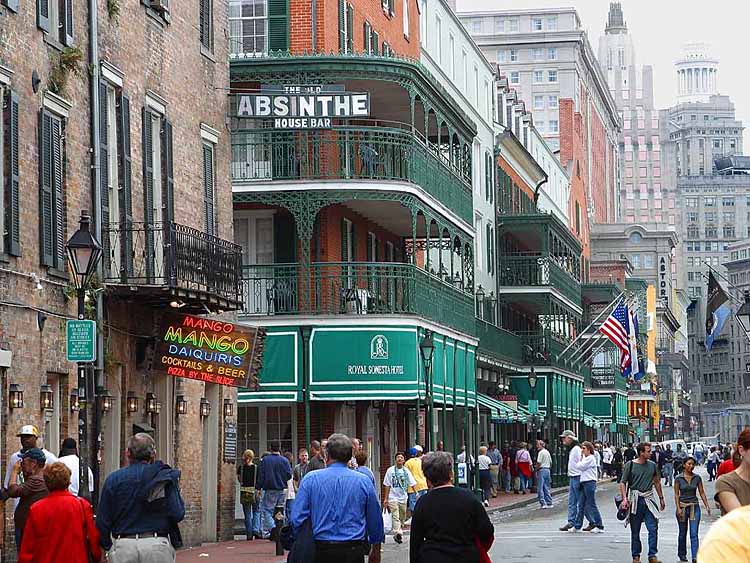
Compare: There are many similarities between the Breakers Mansion and New Orleans. They are both French inspired, very vibrant in color, and style. Through moldings and fencing, both places take a lot of pride in the detailing they possess. They also are both sites where there is a lot of emphasis on entertainment. There is entertainment with music; dancing and drinking are popular at both locations.

Contrast: Even though they are both similar locations, New Orleans and the Breakers Mansion are also very different as well. Though they both have emphasis on color, the Breakers contains colors pertaining to royalty such as gold, silver, red and deep purple. New Orleans colors are very bold and bright. New Orleans is also looked upon as a loud location, almost rambunctious in manner, whereas Newport is known as a quiet boating town.
Sources:
http://www.antiquesjournal.com/pages04/Monthly_pages/july06/newport.html
http://www.newportmansions.org/index.cfm

Alexander Calder Mobile: Washington D.C


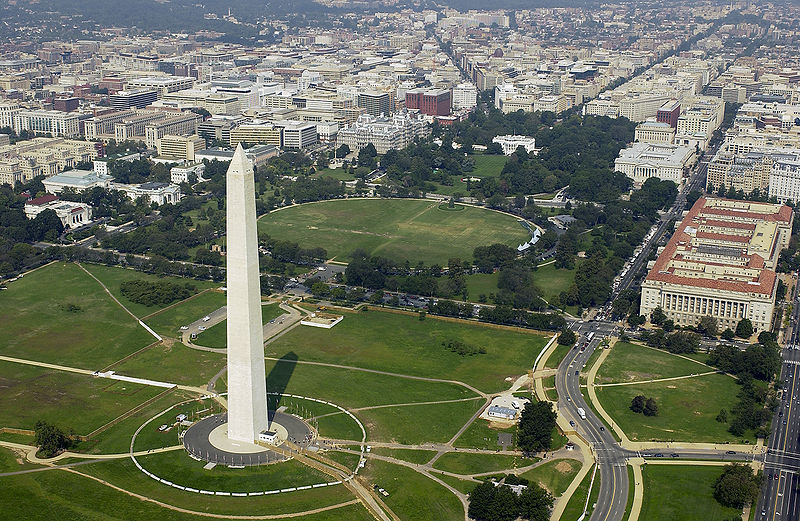
Washington D.C, also known as the District of Columbia is the capitol of the United States. It is home to the Lincoln memorial, the White house and many other buildings that serve as government operations and memorials. This place is also a home to the Alexander Calder mobile. The reason this place serves a good location for the mobile is based on size and location. 
Washington D.C has been a prominent tourist attraction for many decades now. Therefore, it is always highly populated. The smithsonian museums are open free to the public which creates more interest because cost to be entertained in D.C is less. during a work week, over one millions people inhabit the capitol, while only 500,000 citizens actually live full time in the area. The mobile is located in the national art gallery, which is one of most popular attractions for people to visit. it was most likely placed in this building for one of the purposes of being seen by many people daily. 
Another reason the Calder Mobile is located within Washington D.C is because it is a large piece. Scale seems to be an important factor in placing items and building architecture for the D.C area. the lincoln memorial is one example because even president Lincoln himself is at a much larger scale than the size he actually was. also, the washington memorial stands above the city with a large pond landscape spanning below it. this size was done on purpose to show the power and wealth that the United States consists of.  

info found at www.washington.org

similar place-The Hollis Ashtray in Chicago also uses scale and power as a place for an artifact. the population of Chicago is much larger than Washington D.C, but still places and emphasis on tourist attractions as well as larger buildings that can "defeat the odds."

different place- The shoreline of North Carolina is a place that would not fit the Alexander Calder Mobile. The location is small and the "cozy" design style seems to be more classic and wouldn't match the contemporary style created in the Mobile.

On The Shorelines of NC and VA


Located along the Virginia and North Carolina boarders is Kerr Lake, it is a very popular tourist attraction. In its construction in 1952 between the counties of Vance, Warren, Granville (NC), and Mecklenburg (VA), it served as an electricity producer as well as a flood controller. The lake stretches over 850 miles of shoreline, and cover approximately 50,000 acres. The depth depending on the location on the lake can range anywhere from thirty feet to as deep as one hundred feet. It is believed to be named after John H. “Kerr,” who is believed to be the creator of Kerr Lake. The official name of Kerr Lake is “John H. Kerr Reservoir”. The Roanoke River flows into Kerr Lake. The lake is also upstream of Lake Gaston. Many who reside in North Carolina and Virginia see it as a place for many recreational purposes including fishing. The lake is said to carry a number of different fish including Bass, Catfish, Crappie and Bream. It also serves as an area for many camping grounds. These Camping grounds include Kimball point, County line and Hibernia. Many people also view it as a place where they are able to go motor boating and sailing. They can do so on three privately owned marinas. These marinas are Steele Creek, Satterwhite Point and Clarksville, http://en.wikipedia.org/wiki/Kerr_Lake. Furthermore, along the shorelines are get-away cabins for tourists that come from all over for these many attractions. Placed in few of the cabins are waterbeds, people who choose to have these cabins to accommodate them may have the intensions to gain the feeling of being closer to water and that relaxing feeling while doing the many water sport activities, however on the other hand the other cabins may have regular bed that contains a mattress, one who choose have a regular bed to accommodate them may enjoy the water, but may want to relax from the motioning of the water after engaging in the all the water sports all day. Another similar location maybe the east coast lines of North Carolina , which is also a tourist attraction, but also serves as a vacation area. The coast lines consist of beach shores, which give beach house accommodations.

Place for Ray Hollis ashtray::Chicago


When customers walk into what looks like bar—they have to rethink. This particular bar is actually a tobacco bar that is located in Chicago. In the front window of the bar, there’s a sign that reads “Smokers Always Welcome”, which in today’s world is unusual because this city has very strict anti-smoking laws. When you walk in the front, you enter a wet bar and coffee bar, and then you move to the back which includes the tobacco bar. This tobacco bar has nine different varieties of tobacco blends in which the tobacconist can take those blends and create a pack of cigarettes especially for the customers. By having the Ray Hollis ashtray located in this tobacco bar, it could really make the business sky rocket for the simple design it has and how unusual the ashtray itself is. Since the ashtray does not look like your typical ashtray—it really catches the eye especially because of its aluminum material and modern appearance.

There are many similarities between the tobacco bar and hookah bar. One of the obvious reasons is that they are both places where you go to smoke. Another reason is because of how simple both artifacts are in form.

A contrasting place is the Biltmore Estate. Although the Biltmore has a smoking room within in, the styles are both different. The Biltmore has a more complicated form rather than a simple one.

Pair of Candlesticks-Washington D.C.


The pair of candlesticks which were originally found in the Nichols House Museum and were then placed by me in the Red Room of the White House, and then were next placed in the Red Room in the White House until now where I will place the White House in Washington D.C. Big leap. Our nation’s capital is home to many historic artifacts such as the pair of candlesticks, although many are currently in museums and other such places. Washington D.C. makes sense logistically to place the candlesticks not only because of the space and building choices earlier made, but because of the historical significance of the city itself. Even though this city has seen many changes, politically, stylistically, etc. it has remained true to being historically significant. Because the White House is such an important building to the entire country, it is important that the US capitol is where it is placed. Washington D.C. has its own flag, seal and is its own municipality, not belonging to any of the other states. Washington D.C. is a minority majority state. D.C. is similar to Boston, the location of the Nichols House Museum, in that it also has a large historic importance. Boston is one of the oldest cities in the US. Because of the historic ties in both cities, the candlesticks could easily be imagined in D.C. just as easily as in Boston. Washington D.C. is the host to many high profile museums and other such attractions. It has a wide population demographic that includes many ages and races.

Similar: Sandwich, Massachusetts is similar to both Boston and Washington D.C. in its historical richness. Sandwich, like D.C., has undergone many changes but has remained true to its original intent as a city.

Contrast: Ashville, North Carolina is very different from Washington D.C. in that is isolated and not in the public eye. Ashville is a remote and rather rural setting in contrast to the more urbanized city of Washington D.C.

Place for a bean bag chair: New orleans

While the racial demographics of New Orleans, LA are not well varied, the high rate of tourism in New Orleans is what makes this a special place to celebrate all the many people brought together. CNN released a poll in 2007 on the tourism of New Orleans; according to the poll, New Orleans is the best U.S. city for live music, cocktail hours, flea markets, antique shopping, nightlife, "wild weekends," "girlfriend getaways," and cheap food. New Orleans is considered one of the most famous places to celebrate Mardi Gras, the day of Carnival in the three day celebration before Lent. With that said, New Orleans is also a top gay friendly environment, meaning there is much eclecticism in this environment. Such a celebratory environment should hold places for partying and relaxation as well as multiple different lounge or club environments. Thus a hookah bar is an ideal business to be placed on one of the busy streets of New Orleans. The bean bag chairs inside the hookah bar speak a welcoming and comfortable language as well as inviting to all different people because of their simplicity in form. All the madness at celebrations on the streets of New Orleans can be calmed down by inviting relaxation to the environment.

The Biltmore Estate, Asheboro NC
(Mark Mundorf's Place for Victor 2 Humpback Gramophone)
Compare: The similarities of this location and New Orleans is that both locations were built around French heritage. New Orleans was a part of French territory until the Lousiana Purchase and the Biltmore estate is of French revolution architecture and style.
Contrast: The classicism of the Biltmore estate is very different than the eclecticism and community involvement that New Orleans is about. The Biltmore Estate is secluded and organized compared to New Orlean's diverse tourist environment.

The Town of Brighton

Today, in 1890 Brighton has seen alot of change. This town dates back around the 1000s and was previously called Brighthelmstone. In 1514, Brighthelmstone was burned down by the French in the war. After that this town was nothing but a quiet fishing village. Georgian Terraces was then brought to Brighton during the late 1700s and this is when the town started to emerge from a fishing village to a resort. But it doesnt stop there. Prince Regent, later known as King George IV, first visited Brighton in 1783. After spending most of his free time in the city he built the Royal Pavilion here. This palace was influenced by Indian architecture and has oriential design influence on the interior. Prince Regent used this space as a vacation home. This only encouraged population growth. Other buildings that were considered major attractions include the Grand Hotel, the West Pier, and the Palace Pier. In 1841 Brighton introduced its first railway. The population has almost doubled since then. The town of Brighton has now been converted to a health resort and a place of fashion. Shopping in the area is a common past time. Also decorating is common with the women. One object that is in high demand is the convex mirror that many people possess in their homes, not just in Brighton, but all over England. The Beaches in the area draw many people, especially from London since it is an hour away by train. Brighton has grown alot and will continue to grow.

Brighton can be compared to Winston-Salem, North Carolina. Like the city of Brighton and Hove, Winston-Salem used to be two separate cities, Winston and Salem. Winston-Salem has also come along way in terms of population and growth. It is home of many business headquarters and is rated one of the best cities to live in with in the United States.
You can find this link in Morgan's post.
In contrast to New York City during the stock market crash, Brighton was burned by the french and took hundreds of years for the city to gain population. New York is known for being the largest city in America and is very industrialized, where Brighton is a place typically for day trippers and vacations.
This link is made from Ashleigh's post.


ThE liNeN PrEsS: pLaCe ~ Ashley Blackburn


Pressing Past The Bedroom Wall

Worldly impact, an idea that one may come across when thinking of a worldwide embrace of a particular style, or a huge new advance in the ever so changing technology. However, although a linen press may not necessarily be one of the top ideas that come to mind, I believe it has greatly impacted our world. Of course there is the obvious need for storage, which is required by people everywhere. By fulfilling this need, the linen press is transforming the type of lifestyle that one may partake in, thus determining what type of place would allow for any such way of living. Judging by the furniture’s main function, providing extra storage (mainly for linens and more than likely, seasonal items), it’s easy to assume that this piece of furniture was not absolutely necessary, especially if those residents who were less fortunate could get along without it. It is my assumption that not every homeowner had a linen press present in the house. The linen press was one of arts and crafts style, which translates into hand craftsmanship and a costly price tag. This all just equates down to the simple fact that people living in poorer areas would, more than likely, had to make do with the basic storage pieces they did have, for example a trunk or dresser. The linen press is a great example of excess. Yes, even some furniture can be rather unnecessary. It points out the lagging drive to always want more. The linen press acts as separate storage for seasonal clothes/linens where a dresser or other cabinet would have done the job just as well.
Remaining in the realm of the upper class, this particular linen press was said to stay within the Whitehead family for the duration of its lifetime. The Whitehead family was responsible for the formation of the Byrdcliffe Arts and Crafts Colony. Being the head of the colony, the Whitehead’s linen press was kept in a place of high quality, creativity, and wealth. The actual place setting that the house resided, which contained the bedroom, that stored the linen press, who held the linens, was near Woodstock, NY.

Similar: The brass and copper coal scuttle, I believe has the same connotations about it as an object as that of the linen press. They both serve a function, however, they also both could be replaced by simpler and more basic items to perform those same functions. Although they are both effective, the linen press could be replaced by a dresser; and the coal scuttle could be exchanged with just a simple pal.

Contrasting: Opposite of mine, the Sheraton Tilt Top Dining Table, could not be replaced by any other piece of furniture. At most, the replacement would actually lose effectiveness in its functional capabilities.

Syrian Biscuit Tin: Reading, England

The Syrian Biscuit Tin was found in the bakery of Huntley and Palmers. The bakery was located in Reading, England. When Huntley and Palmers first opened up their bakery they had no idea what kind of an impact that they would have on the entire town. From the 1870 to the 1970s, Reading became known as the Biscuit Town, all because of Huntley and Palmers. When their biscuits had become even more well knwon, Huntley and Palmers transferred their business to a factory in Reading. It was then that even the prison there was known as the "biscuit factory" only because it was located so close to the factory. Huntley and Palmers famous biscuits even had an impact on the football team in Reading. The men on the team were known as "biscuit men". Huntley and Palmers had a key location in Reading that really helped their business and the selling of their tins, like the Syrian Biscuit Tin. The bakery was located on a busy road, and close to the Crown Coaching Inn. This was key because it enabled Huntley and Palmers to sell their biscuits to travelers that passes through the area and stayed at the inn. It became easy for Huntley and Palmers to begin exporting their biscuits once the railroad was more developed. Huntley and Palmers also had a large impact on the town through providing jobs. Once the factory was opened, they were able to employ 5000 people. The business also created jobs outside of the factory with transportation needs. This new demand in labor allowed for the entire town to grow from 19,000 to over 88,000 in 1911.

Similar: Reading, England would be more similar to that of Culver City in California. There is a similarity because MGM has its largest studio here and is a great location for buildings, backdrops, landscapes and storage for props because it is so close to Hollywood. The MGM studio is a key part of Culver City like Huntley and Palmers is for Reading.

Different: A place that contrasts Reading would be Asheville, NC where the Victor Humpback Gramophone would be found. The reason these two contrast is because the Gramophone does not directly relate to the city in the way the Syrian Biscuit Tin relates to Reading.

New York City: A Place of Corbusier's Petite Loveseat

Eclectic and modern buildings are all over New York City making it a perfect place for Corbusiers modern loveseat.

modern new york apartment which could easily house Corbusier's petite loveseat


As already iterated in earlier blogs, I think the place that Le Corbusier's Petite Loveseat would be most at home in is New York City. New York is a city of immigrants, travelers, and cultured people. This fits Corbusier's style in that he referred to his design aesthetic as the "International Style."

New York is full of eclectic styles and many art, design, and literature movements formed there. From business professionals to guerrilla theater artists there is no stereotype to the owner of one of Corbusier's loveseats. The sleek modern design unites a myriad of people and New York is the perfect place for this piece since it is such a diverse city.

One can walk down the street of New York and see numerous vendors selling knock-off items such as fake Gucci and Prada purses, or bootleg movies, some of which are surprisingly well made. The petite loveseat is of such a simple form that another manufacturer can easily recreate it. The original steel structure however might be a little more difficult to replicate. Corbusier's loveseat is on the more expensive end of furniture, and New York being a city of immigrants one will certainly find cheaper replicas of this piece of furniture. Although not everyone can afford the original loveseat from Corbusier's LC2 collection, they can own a replica inspired by the luxurious modernity that Corbusier created in the petite loveseat.


sources: wikipedia.com, apartmenttherapy.com


Compare: Alexander Calder's mobile in Washington D.C. would also fit nicely with Corbusier's modern loveseat. Washington D.C. is also a "International City" in that people from all over the world live, practice buisness, or simply travel there for numerous reasons. Calder's mobile is modern and bold and would look fantastic in the same space as the petite loveseat.

Contrast: A place for a bean bag chair in New Orleans is contrasting to the sleek idea of the loveseat in that a bean bag chair is extremely casual. New Orleans is a bit more wild and colorful as a whole while New York encompases very neat and strict and modern ways of living as well as more casual environments.

Dressing table :: [place]

Thinking back to the placement of Jacques-Emile Ruhlmann's dressing table in this exercise, it's roots lie within the art deco movement and the cultural environment that surrounded the period. Used in a movie set during the 1930's, the table exemplifies the lines and forms of art deco design; the set designers wished to convey a contemporary room setting, and the dressing table is the icing on the cake. Movie sets were often smaller structures within a larger studio surrounding. MGM had its largest studio in Culver City, California, where many great Hollywood classics were filmed. The lot housed numerous buildings, backdrops, and landscapes, as well as storage warehouses for props. Culver City is about seven miles southwest of downtown Hollywood; being on the outskirts of Los Angeles allowed for the studio giant to purchase a larger plot of land with a few existing buildings in which to build its empire. The geography of the city is mostly a flat land, near the Pacific coast, but is without the rolling hills found in surrounding Los Angeles. Culver City's small town feel lends itself to many television shows and movies still filming there, as the town is about 5 square miles and had a population of about 39,000 people in the year 2000. Home to picturesque neighborhoods and idyllic scenery, much of the city has remained the same since its incorporation in 1917 by Harry Culver. During the 1960's and 1970's the decline of the studio as the major player in film making led to the demolition of many old studio buildings (MGM's "back forty" acres) to make way for subdivisions and shopping centers. Though its heyday may be over, Culver City remains one of California's picture-postcard iconic American cities.


similar to: The Marian Mahler curtain in Torrance, CA. With an obvious proximity to each other, Culver City and Torrance, CA are quite similar in many ways. Climate is the first similarity, as both are warm and mostly dry climates, and are near the Pacific Ocean. What ties both the Ruhlmann table and the Mahler curtain is that both artifacts are representative of what was "modern" for each of their time periods. These two contemporary objects have been placed in California, known for it's progressive ideals and tastes.


contrasts with: The Calder mobile located in Washington D.C. Our nation's capitol is a busy tourist destination with landmarks and historic sites galore. Its population is about 8 times the size of Culver City, which in comparison seems like a sleepy little town. Although many famous people have graced the grounds of Culver City, the famous (and infamous) of D.C. are politicians, not actors. This aspect is what determines the buildings of each city, with mostly residential structures in Culver, and a much larger ratio of commercial buildings in D.C. One other quite blatant observation are the differences in styles of buildings, as D.C. is about a century older than Culver City.


Oldest Town on Cape Cod

google images


Sandwich Massachusetts is nothing if not a town rich of history. Known as the oldest town on the Cape Cod, Sandwich was founded in the mid 1600s. The small town, originally a timber exporting community, would not see a drastic change until 1825 when Deming Jarves moved to the coast.

Relocated from Boston and the New England Glass Company, Jarves selected Sandwich for the potential sea trade and shipments. The location was also opportune due to the small size and promise of growth. Not only did Jarves begin to recruit employment locally, but he also enlisted the help of glassblowers from his previous company, as well as men from England and Ireland.

In no time, the Boston and Sandwich Glass Company prospered, producing beautifully crafted pieces. The Triple Overlay was by far one of the most interesting pieces. Symbolic of the rich history and luminous potential, this lamp guided and aided the growth. As the Company flourished, so did the adjoining community. A thriving community depended on the outcome of its factory, for it was the dominating employment in the area. The Company, in its most successful stage, employed hundreds of workers. Times were good for Sandwich. Once a small, agricultural community, now the town had something to be proud of, something that influenced not only them, but far beyond. This was the case, until the company’s closure in 1888.

Glass Making literally shaped the environment around it. When The Company closed, there was nothing for the community of Sandwich. It forced the town into an economic depression, workers were forced to find other jobs or worse, leave Sandwich. Countless companies attempted to fill the place of the Boston and Sandwich Glass Company, but none would suffice; the use of the overlay method would never be as lucrative as when developed by the originally factory. Years passed, and no sign of hope came for the glass industry. By 1944 every last factory had been removed, leaving very little of the company that meant so much to the town.

Though Sandwich no longer produces glass, the history of its foundation resides everywhere. The glass museum pays homage to company, and houses an array of beautifully crafted pieces. Residents cherish the glass products as well, collecting them in tribute. Now, the glass products from Sandwich are a rare commodity due to their craft and history.

Sandwich and Boston Massachusetts share a fondness for glass making. Both produced some of nation’s finest glass of the time. They were innovative, curiously experimenting with new ideas. Business wise, Boston and Sandwich were almost a pair, but community-wise, they were very different. Unlike Boston, Sandwich and its glass company were one in the same; they were dependent on each other. Where Boston flourished prior to the Glass Industry, Sandwich prospered because of it.

Sandwich Glass Museum http://www.sandwichglassmuseum.org/

Saturday, November 29, 2008

Victor 2 Humpback Gramophone in Asheville, NC


The Biltmore Estate was built in Asheville, North Carolina between the years 1888 and 1895. The city itself was founded in 1797 in the Swannanoa Valley within the Blue Ridge Mountains. A motif I’ve started to see is the idea of isolation—something I think can also be applied to the city of Asheville. Listening to the Victor 2 could completely cut you off from the outside world, enveloping you in music, creating an escape. Geographically speaking, Asheville does the same thing (just without the music). Being nestled in the mountains of western North Carolina, Asheville was more difficult to reach than other cities in the late 19th century. Even the Biltmore Estate itself isn’t in the busy part of Asheville—it’s an outlier. There’s a 3-mile-long road that leads to the mansion, furthering the idea of isolationism. Another attractive feature of Asheville is that it’s situated in a huge forest (now Pisgah National Forest). Being close to nature is also something highly desired. The Biltmore Estate was built in this area because the Vanderbilt family liked the climate and geography there so much. Even the Victor 2 mimics forms found in nature. The horn of the Victor 2 can be seen as the same form of a flower. All in all, I think isolation is the main idea of Victor 2, the library, the Biltmore Estate, and Asheville. I also think this is a luxury. Not everyone can afford to live in secluded areas where the woes of city life can’t reach.
In contrast with the Victor 2, the Tiki lamp seems to be a more temporary artifact that was highly influenced by another culture. The Tiki lamp was part of a movement in the mid 20th century that was a result of US soldiers returning from the Pacific and bringing part of the Polynesian culutre back with them. However, the Tiki lamp probably was not a symbol of wealth like the Victor 2 could have been.
Like the Victor 2, however, the Herter Brothers' Library Table is a symbol of power, sophistication and wealth. As it is placed in a lawyer's office in this case, the table reflects the level of status the owner has in society.

Source: http://en.wikipedia.org/wiki/Asheville,_North_Carolina

Friday, November 28, 2008

Lidded Punch Bowl and Ladle

The Art Nouveau design movement was well under way by 1900 when the Lidded Punch Bowl and Ladle was designed. The buildings that were designed in the earlier years of Art Nouveau, such as Casa Batlló and other building designed by Antoni Gaudi, influenced architectural design world wide and also the wide range of art and design areas. The punch bowl is a decorative art piece designed by the German company Würtemburgische Metalwarren Fabrik which has designed many similar punch bowls that are in the Art Nouveau style that reside all throughout the world. While the Art Nouveau architecture influenced the world by marking the land and being known internationally, not everyone had seen the style first hand. The decorations and art influenced by the architecture were tangible objects that potentially anyone could have in their home or have seen it elsewhere. Not only did the early architecture that was designed before the Lidded Punch Bowl and Ladle influence the rest of the Art Nouveau period, the punch bowl itself, and others like it, influenced design as well. Organic curved plant like forms are very common in this style. Colored glass is also something that is an Art Nouveau signature element that is repeated throughout the Art Nouveau time period.

While the Casa Batlló is located in Barcelona, Spain there are many other places in Spain, some by Gaudi, that the punch bowl could be located. Spain seems to be an ideal home for this punch bowl.


compare: Much like the Lidded Punch Bowl and Ladle, Leah’s Mantel Clock is a decorative Art Nouveau piece that serves as decoration as well as serving a purpose. Both have free flowing curves and can be located in any home to add some interest.

contrast: Jacques-Emile Ruhlmann's dressing table is placed in Southern California which is not a likely place for an Art Nouveau punch bowl.

Saturday, November 22, 2008

earth meets heaven mercury group


2nd installment of extra credit:

Mercury Group: members not pictured that helped were Sara Easterling and Christyn Dunning.

Wednesday, November 19, 2008

The Beat of Saturn's Drum


Our pattern and haiku are inspired by Japanese Taiko and Daiko drums. The drummers use strong, graceful strokes in fluid rounded motions. As they beat their drums they appear to be dancing. These rounded motions and repeated staccato rhythems are the foundation of our pattern and haiku.

Spiritual drums start to beat
Rhythm and patterns repeat
East and West shall meet

Uranus East Meets West

venus 2

Haiku response

Remeber the past
Strong self expression blossoms
Modern weaves in

The art piece pictured is a woven collage of textiles, colors, textures and images inspired by design from the East.
Team Earth considered the strong historical ties and cultural traditions, which are often thoughtfully woven into modern Eastern design.
This skillful integration was interpreted by Team Earth as a reaction to the current day context of rapid growth and power transitions that are re-shaping lives and cultural identities in the East.


Please note: Unfortunately some members of Team Earth are not represented in this picture due to schedule conflicts. All members participated in full.

earth meets heaven mercury group

infinite light void
repetition circle square
reflect heaven earth

venus


gridded form lies here
horizontal lines take shape
balanced linear

East meets West: Uranus


Roads of spice and silk
Marriage of materials
Nature Inspires


East meets West: Jupiter


east meets west: neptune


nature becomes form
bringing the outside inside
layering design


Extra Credit Mars Group


Haiku Concept

Evolve the beauty
there is nothing more pretty
a temple forming

we wanted the location of our design to be on top of the cardboard cantilever in the 3rd year studio, but we did have a ladder the composition is located in the corner above third year studio.

Wednesday, November 12, 2008

---ThRoUgH OuT tImE--- Ashley Blackburn

Tuesday, November 11, 2008

Monday, November 10, 2008

leah petriccione- design timeline for paper 4

Historical Progression

Present Roots of the Past


Timeline of Design/Architecture

Time line of architectural and design styles between 1850 and 1975

timeline


Laura Snoderly

Design Movement Timeline:Lauren Thore

Timeline

Timeline

19th & 20th Century Design

Design Timeline

timeline


A Guide through Time.....

DESIGN TIMELINE 1850-1975

timeline

A Glimpse Through Architectural History (Jayson)

design timeline

Design Timeline

Modernism: Homage to the Past Timeline

timeline

THE Timeline

Sunday, November 9, 2008

Celebrating Technology: Past and Present

Architecture Timeline

Time Line-Jennifer Cochran

TIMELINE:

Design Timeline


Timeline

Architectural Timeline

Timeline--Josie


Timeline


TimeLine Paper 4

Timeline Paper 4

200 years


timeline


Timeline for Paper 4

Design Movements/Styles Timeline

Lloyd's of London Building Timeline

Design timeline

paper 4 timeline


Spans of Time


I'm a non-major, so please don't laugh at these :)

What's the Connection

Paper 4 Time Line

Design Time Line

Architectural timeline

paper 4 - jennifer deal


Paper 4 Timeline

Steps Towards the Future


Monday, November 3, 2008

The Mechanical Game Table in its building

The other day, I was apartment hunting in Portland, Maine. While riding down a road called Blue Stone Ave, which is a lovely street right next to the water, I was lucky to see a "for sale" sign in front of a charming historic apartment complex. Eager to get things started with the whole process, I immediately contacted the number of the realtor on the sign. Fortunately for me, Ms. Brown--the realtor-- was able to meet the next day and show me through the apartment.

Usually when I think of an apartment, I think of small and confined spaces. This apartment was anything but. Dr. Stevens--the man who was selling the apartment--designed the whole place himself. Ms. Brown informed me that his main goal was to embody the essence of the 1800's. I admit that I know little about furnishings and different time periods, so its doubly amazing that even I appreciated all of the hard work Dr. Stevens put into his place. As Ms. Brown leaded me through the different rooms, my jaw dropped when we arrived in the "entertainment room." So many wonderful pieces were placed elegantly in this room, as if they were made to be there. As soon as I could peel my eyes away from the large piano next to an even larger bay window, I looked more closely at some of the more subtly intriguing pieces. I walked by a small table and almost didn't stop to look at it. What made me do a double-take is the fact that It was slightly open, as if the table part would fold up. Ms. Brown smiled and told me about the table, which turned out to be named the "Mechanical Game Table." It folds out when you want to play and becomes a mere, yet beautifully crafted wooden table when not in use.

Soon after my walk-through of Dr. Stevens' apartment, I was signing papers and kissing my savings goodbye. I knew as soon as I set eyes on the apartment that it was mine. I even made arrangements to buy the mechanical game table off of Dr. Stevens! This has been a very successful apartment-hunting adventure.

Rookwood Vase in Building


I am so happy with my new home! My husband and I recently moved from Connecticut to North Carolina where we have just finished our dream home. We share a love of art and modern architecture and design that we expressed through our new, post children in the house, home. In Connecticut, we were lucky enough to have examples of work from great modern architects like Eero Saarinen, Philip Johnson, Frank Lloyd Wright, and Richard Meier near by. When we came to a point where we were thinking seriously about what we wanted to do and how we wanted to live with our future retirement in mind, we wanted to move somewhere that also valued modern architecture. As a curator, I have been interested in North Carolina's history with involving the Black Mountain College and North Carolina's strong craft and pottery traditions. I have a small personal collection of pottery and ceramics that spans from Rookwood to Mark Hewitt. As avid Dwell Magazine readers, my husband and I followed the two Dwell prefab homes that were built in North Carolina and noticed some interesting articles on North Carolina architectural firms like Tonic Design and Frank Harmon (worked with Richard Meier; one of my favorites!). As we researched North Carolina further, we found that some areas were highly ranked as places to live that offered modern amenities while also offering a low cost of living. The more we learned, the more central North Carolina looked like an ideal place for us to move where we would be able to afford to build the modern home that we have always wanted while still enjoying some of the benefits of city life and university communities. That was the path that we followed and now our home has been completed. We love the way that we can display our art and pottery collections in the house's simple, clean rooms and the way that the large windows and natural materials bring the beautiful surrounding woods indoors. Our architect did a great job of incorporating local materials, something that we appreciated in Frank Harmon and Edward Lowenstein's local architecture. I am thrilled to be able to enjoy modern architecture that provides a beautiful but unobtrusive backdrop for my art and pottery collection in an area that values these interests.

The Barcelona Daybed by Mies Van Der Rohe would work well in this home. Its clean modern lines and status as a collectible piece designed by an important modern architect make it physically compatible, appealing to clients who are collectors like the home owners above, and appropriate for a modern building. The Barcelona Daybed is often seen in leather, mixing a natural material with an industrial one similar to the way this home combines industrial materials and methods with natural materials.

An artifact like the Tiki Lamp is less appropriate for this type of a space. It is associated with highly themed and elaborately decorated interiors and a 1950's feel as well as a less serious and less expensive type of space.

Laura Snoderly

Two Sides


Two side
I grew up in a suburb of Chicago called Cary. It was about an hour in car and about 45 minutes on train. The house that we lived in was similar to the still of Moore and which is the same still around town. When I was growing up my two brothers had to share a room together so one side of the room was had posters of bands, weird candles and a lava lamp. The other side had nothing but what he was working on and a calendar for all of his workout stuff on it.
The biggest thing about living an hour away from Chicago is we would go take a trip up the to see a ballgame or just go shopping down town. Now looking at it was like living in two different worlds just like looking at my brother’s rooms. You can see how my brother’s two different stalls did not work for the room but it fitted them for their own still and used. Just as Chicago has high buildings and more business for the need of the city and my hometown have just residences for people that want less active when they get home.
So the activity on Paul’s side with has the lava lamp shows more of a relaxed type of environment. Which Russ’s side is all about business and getting things done. Which you can see know that the suburbs are for more want you want it to be and if you live in Chicago you have to commit to an apartment that is more boxed in unless you have a lot of money. But the city is not all bad because you have more things to do and different things to look at like the Art museum and the bean. As in the suburbs people are more toward them own look of there home but are more classic about it in most places.

Decatur St., New Orleans

The second story of the Hookah Cafe on Decatur St. of New Orleans is the ideal location for a bean bag chair and more specifically, the hookah room that I designed for the bean bag chair.
Decatur St., one of the celebration streets of Mardi Gras in New Orleans, is much calmer than say Bourbon street but is still centered on community and socialization. The Hookah Cafe sits at the street corner, open to people from all directions. The hookah lounge sets a perfect setting for relaxation and socialization, with comfort and conversation circulation. With all the chaos of new orleans celebration a hookah cafe also serves a good escape for relaxation in a crazy city.
Hookah lounges and the Mardi Gras celebration both attract a young popluation, college students and young adults, making New Orleans a great location for a hookah cafe.

New York Flat & Corbusier Loveseat


Walking the streets of New York I go about my daily route delivering packages for UPS. I see all walks of people in my job. I walk into a law office dropping off a package to the receptionist. She is able to talk on her headset and type at the same time as if she were a robot. I glance into the next room where I hear a booming voice of a man. He must be the boss. I see a very modern black loveseat with a chrome base and I recognize this piece of furniture, I admired it the day before at a couple’s stylish New York flat. In my line of work I am only in a certain environment for a minute or so, long enough to get a signature. I am fascinated by how environments reflect the personality of individuals. I am able to understand what people like and dislike by simply looking at their everyday environment. Seeing this loveseat in two different environments with sets of very different people I see how design connects people.
The law office was cold with marble floors, stark windows with no blinds or warm lighting. The most compelling element in this office though was the acoustics; the clatter of the keyboard and the voice on phone line, the sounds of high heels and dress shoes tapping on the marble floors, and the boom of the boss’s voice resonating into the lobby area all make this office quite harsh and unyielding. Then I see the loveseat and I think of the stylish young couple’s flat. They resided in an older building across town in an up and coming neighborhood. The neighborhood used to be somewhat dangerous but now it is bustling with artists, young couples and families. Coffee shops and organic food stores line the street. This certain couple lives in an apartment above a Children’s bookstore. The flat has all white walls with traditional molding. The furniture is modern and eclectic and I felt welcome in their warm apartment. I think about the connection between these two sets of people in New York and how they may never meet, but will always be connected in someway through design as all people are.

Corbusier’s work unites people from all over the world. He calls his work part of the “international style” which is appropriate considering his work such as the Petite Loveseat is successful in many types of environments all over the world. New York is used as an example of where you might find the petite loveseat because New York is full of people from all different backgrounds and countries, making the city another broader category that connects these people along with Corbusier’s work.

Blandwood and the Washstand


Following the path of the washstands around the world I have found them everywhere. They first rose in rich homes because of the need for an area to get cleanse yourself during the 1900’s. The washstand itself became a symbol for social status just as everything else in this period. The more money you could spend on something no matter if it was needed or not was the ideal for most families. One home I chose in particular to place the washstand was the Blandwood Mansion in Greensboro, NC. This is home to the John Motley Morehead, previous governor to Greensboro. It is the last form of Italian architecture still residing in NC. Constructed in 1795, it was a piece of the family treasure for century’s to come. Knowing the family like to set the standard for society at the time, I can imagine them purchasing one of these washstands and having it elaborately detailed with colorful tiles. It would appear in one of the daughters rooms or perhaps even in the master bedroom area.
Most of the furniture around this period was from the arts and crafts movement. Everything was well crafted by hand so that special details were highlighted and accentuated. Compared to a modern version today, you would simply see a vanity counter placed only in the bathroom, not in a room where the bed would be. Bathrooms are still sought out to elaborate and well designed but they have become a private room.
The changes from this late 1800’s and 1900’s to the 21st century today have dramatically changed. First is the appearance of these styles of buildings the washstand might be seen in. Wealthy family had very elaborate houses with many staff and an extensive piece of land. Today’s world we are thinking about, how do we make this compact and fit into our growing society. Therefore, this is the reason why the washstand has become downsized and compacted with the sink so that it connects or attaches directly to the wall of the house. It is interesting to look at other items and notice this change as well. From artifacts to buildings, all have been influenced someway by the changes in society and population growth.

Sources:
http://www.blandwood.org/blandwood.html

Tiki Lamp: The Hula Hut

These days my rooms have become more and more lonely, my straw covered roofs fall in disrepair. No longer do servicemen and their dates for the evening gather here in throngs for a good night out. It seems all across the country, people don't have as much room for entertainment. This long war seems to drag on and on, maybe one day my eaves and timbers will resound with the life they once did. These harsh times make me remember the glory days, the good places of my youth when times were well.......

I have not been around as long as many more distinguished buildings. I do not perform a big and important task, at least not in the way most people think. While I do not stand in such high regard by many, I am treasured by nearly all. Every morning and many late nights I look out over the waters of the pacific, as they wash up on these Hawaiian shores. See over there in the corner booth some young sailors noisily commune about sea stories. Opposite them some Marines poke fun at the drunkard "squids" who can't hold their liquor. They say what they will, but I have been watching how much business they have given the bartender and I know differently. In just a little while my inhabitants will become unruly in their cups and the military police will be called. Roused by such authorities Drunk and sober alike will muster their sea legs for a good sprint for freedom. Out near the beach the hula hut reverberates with trendy big band music and glows from polynesian lighting and small incandescent bulbs. Life is good for now, tomorrow brings it's troubles which none here, nor across the nation can fathom. Life is good for now. Waitresses in grass skirts and barkeeps in hula shirts hustle about keeping everyone well oiled with fruity, colorful drinks named "mai tai" and "singapore sling". All around I see such life and exuberance, it is my joy and my purpose to be the subject of such debauchery and such communion. My eaves provide the home for these "the good days". Life is good, for now........

As time catches up and my dream of the past ends reality comes back into focus. Over the waters that once held such a mighty fleet, the vista that held such prowess now is empty, littered only with the hulks and rusted wreckage, grim reminders of one fateful morning for so many. This war drags on and on seemingly without end. One day, hopefully the masses will return and rejuvenate my halls once more with their laughter and dancing, maybe one day.

The bed with in a buidling

The artifact that is located in the first bed room to the left is the wooden bed that appears to be unfinished. The room where this bed is located it plain just like the bed. That bedroom could be used to a set of siblings around the same age because the bed is a bunk bed which holds two people. This house could be occupied by a family of that just got married and is starting a family. The house consists of two bed rooms and one full bath room, and a garage along with a dining room. The bunk bed could be used for the children; it helps keep the room more organized and clean. This house could possibly contrast the bunk beds because the beds have more of a simple look and touch to them, and if the owner adds decorations to the bed rooms the bed would not be as simple. The order furniture in the room would also not correspond to the design of the bed because the furniture would be more modern and have more decorations to it.

Birmingham Civil Rights Institue


I chose the civil rights museum in Birmingham, Alabama, the home place of my artifact, because my sign was part of the first insurance agencies for African Americans back during the movements. The owner of the company was a free slave in Atlanta, GA, alonzo Franklin Herndon.

I chose to give the artifact back to the community, and place it in the museum to show its influence during the movement.

house in the 1980's


I assume most of us in the class were born in the 80’s. We all can probably remember when cell phones started to become a necessity, computers becoming more popular, and how AOL was the thing to have so you can talk on the instant messenger with your friends at night. Nowadays the majority of the public school systems carry PCs. However, when I was in elementary school, all they had were Macs, therefore many homes carried Macs as their personal computer. My artifact being the Macintosh 512k created in 1986 was placed in a standard home designed in the 1980’s; a 1980’s home which still carried the box TVs in the living room with the floral print couch.
Due to the fact that modern architecture has been becoming the mainstream design today, the contrast between the style back then and now is pretty apparent. I would believe that seeing a Macintosh 512k would look extremely out of place at the Museum of Modern Art. Since technology has been developed at an incredible rate, we are only used to seeing flat screen monitors or a computer with the computer tower built in the screen. It is extremely unusual to see a huge box with a tiny screen that comes with an enormous computer tower at a computer lab in the present day. These computers that are out of date remind me when my parents first bought their computer when I was a kid. It was something that people used regularly back then, but today, we can barely rely on it because our technology has improved tremendously.

The English Life in 1800


Brighton, just a 45 minute train ride from London, is growing rapidly in population. Many people come here for the day to get away from the monotonous rhythm of the city. That’s why we moved here. This town used to be just a quiet fishing village; but nowadays it’s a party city since King George IV built the Royal Pavilion 15 years ago. Secondly, my husband is a prominent merchant in the city, but business slowed down so we decided to move to a nicer area where many wealthy families dwell. We felt that the economic base was better here because there is more money to be spent. Before we bought our house, we were visiting my cousins at their resort. On the pilgrimage back home I saw the house and fell in love. One afternoon before we moved I was window-shopping down town and saw those new mirrors that everyone is fussing over. I find that I can really express who I am through the Regency style so it was necessary that the drawing room downstairs show this; but the room would not be complete with out the mirror. It is absolutely divine to have my guest visit and reside in this space and have their reflective time be expressed within this one object. The rest of the house follows a more classical inspiration. Like most of the other houses around town, ours is washed out- white exterior with black shutters with a strong emphasis on symmetry.

Compare: This house in Brighton is similar to the Blandwood because the artifact can be used as a status symbol for the wealthy and Blandwoood is a large home in the area that exemplies wealth.

Contrast: The Reynolda House is planted on many acres, which include gardens, farms, a golf course, and even a church. Living at the Reynolda House was like being on vacation. The Brighton home was built in the early 1800s, and the Reynolda House was built about 100 years later in 1917.

Through the Nichols House Museum

A youthful, and very curious 27 year old was living in Boston and going to grad school. On a long weekend she decided to explore the city. She found herself in a beautiful old neighborhood called Beacon Hill. Loraine noticed the Nichols House Museum at the corner. It was a four-story brick townhouse designed in the Federal style. She was very interested and decided she would take a tour. As she began her tour, Loraine read the information booklet she was given when she entered to become acquainted with the museum. She learned about Miss Rose Nichols whom was a handywoman, a gardener, and a woodworker. Miss Rose was also very involved with the women’s rights movement. Loraine quickly noticed that much of Miss Rose’s own work was displayed in the house. She also noticed that the interior Greek Revival style was different than that of the exterior. When Loraine came across the dining room she immediately noticed the beautiful large wood dining table in the center of the room. It was adorned with a table runner and large bouquet of fresh flowers. She thought it was very suitable for the room. Not too large or too small, and the style fit the rest of the house. She continued on her tour through the rest of the house. When she left she was very pleased the she choose to go through the Nichols House and has since taken several friends back to visit.

Compare: In comparison to the washstand placed in the Blandwood museum, there is a clear similarity that they are both house museums. Also both the washstand and the tilt-top table became valuable pieces to the family and each house.

Contrast: Although The Virgina Museum of Fine Arts and Nichols House Museum are both museums, they are very different. The Virgina Museum of Fine Arts is an art museum that houses very different artifacts from those in the Nichols House. The experience of visiting the museum would also be very different, with the Fine Arts museum probably being much more formal and not as much about the experience of being in a room, but more focused on the artifacts house there.

Source:
http://www.nicholshousemuseum.org/

The Virginia Museum of Fine Arts


Outside view of VA Museum of Fine Arts

Interior View of Mackintosh Chair.

Upon my visit to the Virginia Museum of Fine Arts, I notice the outside structure is reminiscent of many neo-classical relief type buildings prevalent throughout much of Virginia. Much like Monticello, the campus of the University of Virginia, and many of the buildings in downtown DC, the Museum of Fine Arts compliments these buildings that follow the aesthetic imposed by Jefferson.

The purpose of my visit to Virginia, other than stealing some of my Nona's coveted recipes, is to view the Charles Rennie Mackintosh chair in its element. The halls are brightly and warmly lit with yellow light and sparkling floors that look like reflective pools. Inside, I find the different rooms that house many of the Museum's important collections.

The Museum itself was built to expand upon what the National Gallery of Art displayed in their Art Deco, Art Nouveau, and Modern/Post-Modern collections. I find the chair within the art deco wing of the museum. It sits nestled among other pieces of fine craftsmanship that display the many trends and influences that were so singularly nuanced of that period. The glossy design of the chair, with it's polished ebony wood, colored glass and sharp angles give it edge as it sits among its counterparts within the room. The sheer splendor of the Classical style only serves to cushion the chair within its atmosphere. However, to contrast the piece with it's current setting, the Neo-Classical relief almost serves to hold the chair back from the regalia it might achieve in a more minimalist setting. The dark colors of the chair alone might do well in a mostly white, stark environment, or one with more modern pieces of furniture. In either capacity, the chair is adequately displayed for the public to enjoy.

References: www.vmfa.museum/collections/ourcollection

Mahler Curtain In A House:Lauren Thore


The late 20th century houses illustrated above are from Cliff and Diane Numark’s neighborhood in Torrance, California. They recently had their bedroom redesigned on Design On A Dime, by Lee Snjiders and his design team. Before they had a plain, mismatched bedroom and now they have a well-designed art deco influenced relaxing getaway. I chose this house to add the Mahler curtain in because they wanted the style to be more eclectic than themed and bring in brighter colors.

Compared to an original Art Deco style house it has a very ordinary shape and structure. Art Deco houses appear to be modern machines with protruding angles and elegant materials. Most of the homes are geometric forms that were based off of inventions such as modern aviation. They are also made out of materials such as aluminum, wood, shagreen and stainless steel.

The Numark’s home is similar to most family homes built in the late 20th century because it is modern and does not have any drastic angles or curves. It is a basic family home that is appealing to the eye functionally and not aesthetically like Art Deco style homes. The changes in homes over the last century have been extreme, from unique appearances and to basic everyday materials and forms.

Victor 2 Humpack in the Biltmore Estate


I would say that the main idea of the Victor 2 Humpback Phonograph is being heard both literally and figuratively. Since the Victor 2 was a larger and more powerful gramophone, one of the advantages to having one was that it could produce a louder sound. Obviously, this would be appealing to those who could afford it since they were the ones that would throw parties and entertain large groups of people—they would want all of their friends to be able to hear the glorious music. This idea of “being heard” works even better on a metaphorical level. I would say the Victor 2 was a status symbol and was about letting people hear that you had money just as much about letting people hear the music. For this reason I put the Victor 2 in a study or personal library area. Running with the “being heard” motif, I placed the library in the Biltmore Estate.
The Biltmore Estate was completed in 1895, a few years before the Victor 2 was manufactured (1902). I do not think, however, that it is unreasonable to picture the gramophone within the estate several years later. Built for the Vanderbilt family, the Biltmore House is all about saying, “hear we are,” and being “heard.” At 175,000 square feet, this building is more of a symbol of wealth than anything else, much like the Victor 2. The Vanderbilt family didn’t spare any expense either, as they hired Richard Morris Hunt to design the chateau and Frederick Olmsted to design the estate grounds. Even though it is situated in the outskirts of Asheville, NC, it still attracts thousands of visitors to look in awe over the immense wealth the Vanderbilt family had.

Similar to the Victor 2 and this idea of making a statement is the Charles Rennie Mackintosh chair. The chair's design is such that you probably wouldn't see anywhere but at the residence of a wealthy person. This chair is definitely a luxury as is the Victor 2 Humpback.
In contrast, the umbrella holder in Prince Gong's mansion is much less about show and more about utility. Even though the umbrella holder is still designed to be pleasing to the eye and isn't necessarily a necessity, I would still say it is less about making a statement because an umbrella holder isn't always incredibly noticeable.

German Apartment 1903 and the Peacock Sconce


As I was walking a small city street in Karlsruhe, Germany, I gazed up at a beautiful apartment building from the arts and crafts movement. The street was apparently upper class and residential. I was visiting Karlsruhe during my studying abroad. Karlsruhe is near the french-german border and next to the black forest and therefore has a strong influence of the french as well as beautiful woodworking such as the iconic wooden coo-coo clocks.

As I stood there with my mouth open staring up, an older woman walked up beside me with a bag of groceries from a nearby market. She asked me in German how I liked the building. I told her that I loved the varying windows and art nouveau emphasis underneath the porch and spaces protruding off the main facade. The woman seemed impressed with my knowledge of architecture and I explained that I was studying to be an architect at a college in town. She surprised me when she responded that she lived on the 4th floor and offered to show me the inside if I carried her grocery bags. I graciously accepted and followed her into the building.

The indoor staircase was constructed of wrought iron and was designed with an art nouveau style with swirls like a vine. The stairs were tiring but her apartment was worth the climb. The inside space was richly designed with beautifully crafted woodwork, rich fabrics and grand mirrors. My favorite part of her home was by far the sconce over her oversized fireplace. My visit to Germany was regretfully only a semester long, but I am grateful to have had a chance to experience the country for what it is worth.

Compare/contrast:
This German apartment building, built in 1903 was from the arts and crafts movement as well as some influence of the art nouveau movement. This building relates to the peacock sconce beacause of its embrace of nature with the peacock motif as well as its embrace of the industrial movement with the use of metals to craft it. This building is starkly different from the American arts and craft buildings such as the Robie House by Frank Lloyd Wright. Wright focus's more on the idea of blending the home into the landscape with a strong horizontal emphasis.

MGM studio, Culver City, CA


Stage 26 (center): the set containing the Ruhlmann dressing table is located on the first floor along the southern (back) wall of the building.


View of the interior showing the set and dressing table. The bed is placed along the eastern wall; the table is on the southern wall.


In 1937 Metro Goldwyn Mayer was one of the largest and most successful studios in Hollywood. However, the massive studio was actually located in Culver City, California, about seven miles southwest of Hollywood proper. Situated on the northwest corner of Washington Boulevard and Overland Avenue, the studio encompassed over 40 acres of buildings and lots in its heyday. Stage 26 is the building illustrated here, in which Jean Harlow's last movie was being filmed until her untimely death ended production. The front of the building is a brick facade of a three story building with only a ground level inside; this allowed for different genres of films to be shot inside since it was somewhat of a generic shell of a structure. From 1935 to 1937 there was a surge of new construction and renovation occurring at MGM, and this was one of the only locations available to shoot in. The origins of the studio date back to 1915 when Triangle Pictures called it home. In 1924, MGM bought the company and proceeded to build one of the most powerful studios in Hollywood, renown for their bright Technicolor films complete with high priced sets, ornate fixtures, expensive wardrobes, and "more stars than the heavens". With such a boom in business, it is no wonder MGM hired a talented designer to dress the Art Deco set of Cafe Society. Authenticity was not an element to be disregarded, and therefore the sets were lavishly detailed down to placing the right textiles and furniture pieces within. The Jacques-Emile Ruhlmann dressing table was the perfect addition to the bedroom for Jean Harlow's enigmatic debutante character. In a film intended to exploit the riches and splendor of the wealthy during the Great Depression, it is apropos that such a fine piece of furniture be incorporated.


Resource: http://www.seeing-stars.com/Studios/MGM.Shtml

Author's note: this is entirely fictional, meant for illustrative purposes only.


Similar to: Prince Gong's mansion. Like the rambling hills, valleys, mountains, and caves of the Prince's estate, the studio is made of many components within a large tract of acreage. The studio has a variety of buildings, landscape sets, and storage facilities similar to the living quarters, gardens, and workplaces of the Prince's mansion.

Contrasts with: Farm House 1900-2000. The ancestral Farm House belonging to the Stanford family, handed down generation after generation, is a stark contrast to the quickly erected and as easily torn down movie set
for Cafe Society. While the house is intended to be a permanent, steadfast structure that will incur improvements and maintenance over many decades, the movie set is wholeheartedly temporary, with little thought about its ability to be sustained for more than a few months. The interiors are also polar opposites, with the simplistic style of the Farm house suggesting a comforting, family-style setting, while the film set is decidedly luxurious and heavily themed in the Art Deco style.

Power and Prestige (Jayson Parker)


I’ve made it. I now have my own law office in the Empire State Building. A building that is ubiquitously known throughout the entire world, and visited by tourists year round. I did not realize the depth of my achievement until that elucidative first day when I moved into my office. It was then that I became aware of the history of the Empire State building.

The little gold frame with off white parchment paper, which was hanging on a pillar in the lobby read. The Empire State building was built in the 1930’s by Shreve, Lamb and Harman Associates and was once the tallest building in the world. It set the standard for all other buildings to aspire to. The idea behind the design began with a race to build the tallest building in the world beginning with the Eiffel Tower at 984’, the Woolworth building at 792’, and ending with the Chrysler building and the Empire State building which were both being built at the same time. The Empire Sate Building surpassed them all standing at 1,250’ and 85 stories. However, before any of this could be accomplished the famous Waldorf Astoria Hotel had to be bought and demolished before any plans could come to fruition. Many were sad to see the famous hotel go, but there was some solace in knowing that it would be rebuilt at 301 Park Avenue where it still stands today.

The Empire State building stands as a symbol of power and prestige. With my office being located at the top of the building it too acts as a symbol of power and prestige. In addition to the location of the office I also have place my Herter Brothers Library Table at the center of the foyer letting everyone know that this is a place full of history, power, and prestige.

In contrast to my building and my table is the National Gallery of Art (East) building. It is a building that was built to be a museum for modern art. It does not aspire to be the tallest or grandest of anything and is not worthy of such antiquity as mine. A friend once asked why I did not like modern art, and I said that modern art is a rebellion from what we know already works and works well. No one will replace the Greek and Roman architecture. It will always be as powerful today as it was then and that is what I associate my antiques with. Modern art is a fad that will shortly fade away.

Identity Through Design

Suzanne Talbots Apartment in Paris located on the Outskirts of downtown.
Suzanne Talbots Sunroom contained the Canoe Sofa located on the second story.


City
Elaine- I’ve never traveled outside of the U.S before but I couldn’t wait to be in Paris. It was a chance to spread my designer perspective and see something different. I heard about all the break through ideas that were taking place and I want to absorb it all. Compared to New York, I just feel that Paris has more to offer. The ghost chair I saw at the Schneider’s just wasn’t enough for me. It was just another idea for something that was already around. Paris on the other hand holds a more international style that pulls more from its surrounding countries. There has to be endless design possibilities. I can’t wait to see something innovated and unique.

Neighborhood

Jean Louis- The best part of my job is passing through the new Lake District neighborhood. Morning is the best time to see this place with its friendly faces taking their morning strolls in the park adjacent to their homes. Being their gave such a Utopian effect like nothing could go wrong here. It’s secluded from the city but still in walking distance. I awed over the steps I placed the milk on for its amazing upkeep. I wanted this place for myself. If only I could afford it.

Apartment

Lorie- I can’t wait to see what Suzanne has come up for me to wear to the upcoming ball. She’s an amazing designer. You could just tell by the way her apartment was set up. You just wouldn’t think a single woman could have all of this to her own. The mixture of fabrics and rich woods she has here are so bold and innovated for a woman. She has style and that is why I chose her for my hat design. This sofa by the way is just amazing in this sun room. She arranged it in such a way that gives it a main focus. I feel privileged and important in this seat. I can’t wait to see what she does next.

Tizio Lamp : Building

cut view of executive designers office.
view of modern building where executive designer works.


I work for Dwell magazine and I am the executive designer. I get to look out my window to see the city skyline. I have worked here seven years to get this big office with a window and view. I am honored to work for a design company that is up to date with the latest cutting edge designs, and a firm that allows me to incorporate some of my own work as well.

As with any other design company late hours, hard work, and lots of coffee are a must. As the hours pass by my brightly lit office during the day, soon turns dark. It makes it difficult to sketch, read and even concentrate when the only option of lighting in my space is a dim lamp or the overhead flourescent lights, which normally give me a headache. “I wish I had more choice and control of the lighting in here, it would probably make my life a lot easier.” Then it hit me, I could design a lamp for my office! I could be the one to choose the materials, the wattage, etc. I grabbed my pencil and sketchbook and began to brainstorm. I knew I wanted something that was very easily adjustable to wherever I wanted the light. Something that was also cutting edge.

I chose the Tizio lamp for my office space because of its adjustable form and intense light source. Rather than squint through the pain of halogen bulbs and wish that I had light conducted to the exact project that I'm working on, I could use the Tizio lamp to do the work for me. Time and time again, I wished that I could find a lamp that did just as the Tizio lamp did with its novelle design. Rather than crowd my desk with excess wires from electrical engineering, the Tizio lamp contains all of its wiring inside it's skeletal structure, and within the base, leaving only a small cord to plug in at the base. With it's adjustable head, I could refocus the lamp on any are that I was working on, and highlight something that originally I hadn't been focusing on.

Some have suggested that I could use a Lava Lamp for a light source within my office. In a close comparison, both lamps are inventive for their times. The lava lamp, with its liquid/solid particulate matter, and groovy coloring also has little setup and takes up not much space on my desk. However, it's color and efficiency would not prove conducive to my work load, as not enough light would be given off.

To contrast with a pair of 19th Century candlesticks, the obvious source of light would be that of fire. Fire, as you know in any public setting, particularly an office, would not be appropriate at all. In addition to keeping my office low-light, the fire hazard alone makes the candlesticks antiquated and insufficient for the space.


Candlesticks in the Red Room of the White House


Last post I placed the candlesticks in the Red Room in the White House. In continuance of this, I placed the Red Room in the White House. Hypothetically speaking, Henry Francis Du Pont of the Winterthur Museum, who helped Jackie Kennedy during her extensive historical renovation, is placing the candlesticks in the Red Room. The following excerpt is a hypothetical example from Du Pont's notes on the remodel.
Jackie Kennedy hired me to help her refurbish the White House interior. In keeping with the older Classical architecture on the exterior, the rooms all have antique artifacts. These artifacts are harder to find than one might suspect. Because they are going into such an important building for the American people, everything must be in a well kept condition and also be historically relevant. I have enjoyed the research that this project has required. I spent a long time looking for artifacts today. Currently we are on the Red Room redecoration phase of the remodel for the White House. It has been a long process and many hours have been put into choosing just the right time period for each room.In addition to the Red Room, there is also a Blue Room and a Green Room. American Empire is the style for the Red Room, Empire Style for the Green Room and French Empire for the Blue Room. For the Red Room, I found a French mantle clock and an empire fire screen yesterday. Today I found a pair of candlesticks that were originally in the Nichols House Family Museum. I had to a little bit of trouble contacting the man in charge of the Nichol's archive of objects, but after a few more tries, everything went smoothly. After searching through the numerous artifacts that the House Museum has, I saw the candlesticks. They make a perfect addition. This room will blend in perfectly with the rest of the restoration and I am very proud of my work.

The White House and it's decor is similar to the West Wing from the National Gallery of Art. Both are built in a Classical style. (Both also house works of art, although one is entirely devoted to this and one is not). However the exterior of the East Wing is very different from the White House. The National Gallery of Art has a very modern exterior with sharp angles and is very sculptural in it's design. The purposes for the buildings are, of course, very different as well. The White House is for living and working and is only meant for select people, while the National Gallery is meant for many people to trample through and does not need to be as closed off as the White House but is free to be more open. The architecture of the National Gallery is able to be so sculptural because it is an art space whereas the White House's architecture has to be much more formal because of its formal purpose.

The Metropolitan Museum of Art is similar to the White House in that they both have columns that hearken to a classical past. Similarly both have fairly complex architraves that add to the formality of the buildings. Also, the front facade of both buildings clearly delineate the entrance of the buildings. Both buildings also have a certain amount of clout in association with their uses.

Russian Home- Jennifer Cochran-Russian Daybed


Edward: While taking a hike through the woods I cam across this older style Russian home set back in the trees. I pull out my camera to capture the image of this beautiful home from the 16th century that is covered in snow. While studying this home I wondered what the inside of it would look like and whether or not the owners would let me take pictures of it. I then wondered if it functioned very well, if all the space was used to its full potential. I hope that it is and if not then I hope that future homes would be more functional.

James: I guess the people in the mountains don’t get out very much since I am delivering there groceries to them. I assume they must have some little kids because they ordered a lot of baby formula. The house looks very nice can of older style to it though. I bet there rich with a nanny too, for their kid. I’m sure there also wasting a lot of resources trying to heat this big home up here in this snowy region.

Bella: I loved my 16th century style Russian home. I’m not use to living out in the mountain region and I never imagined that it could get so cold. Whoever originally built this home did not think about insulation very well. As soon as my little girl gets a bit older I’m going to do some major remobilizations to get this home up to date.

Compare: Hoover Winthorn House Museum this older styled is similar to the Russian styled home that was created using a 16th century style. Though there are many difference between the two homes the similarities are very prominent as well. Including the fact they are both surrounded by the environment even though not environmentally friendly.

Contrast: The Barcelona Daybed building is an apartment complex built in a city. The environmental contrast is extreme. Plus the time periods in which the two buildings were created. The Barcelona Daybed building was built in a more modern style.

The Patriot Radio place within the Pro Sunila in Finland.


The Patriot Radio was designed by Norman Bel Geddes in 1939. Geddes was one of America’s most prolific and influential industrial designers of his time, and even throughout today. He helped in creating the streamlined style that defined America throughout the 1930’s to the early 40’s. His objective was to promote both American technology and culture, in hopes to bolster national pride during the difficult years of the Great Depression. The Patriot Radio is made to represent the patriotic stars-and-stripes motif.
Times were rough during the depression, and designers of the time wanted to create objects that were optimistic and forward looking, hence the modernist approach to both the patriot radio and the building it has been place within. Alvar Aalto created a grand, industrial design the Pro Sunila between the period of 1936 and 1939 in Finland. This design was considered superb Modernist architecture.
A lot of the architecture and design that was built prior to the depression kind of had a one-way approach to thinking. The design surrounded the pro sunila was traditional and boring, not to mention a reminder of what was happening at this time. That why Aalto’s design was a breath of fresh air, and gave people hope for a better, more prosperous future.
The reason that the patriot radio can be seen within the pro sunila is because of the streamline, modern design. Both the pro sunila and the patriot radio have straight lines and a clear expression to get their point across. Their designs are simple, but aesthetically pleasing at the same time.

Singer sewing machine in Frank Lloyd Wrights Home & Studio


Frank Lloyd Wrights ‘home and studio’ is located at 951 Chicago Avenue, Oak Park, Illinois, in an architecturally rich neighborhood only a few minutes from downtown Chicago. The neighborhood has many houses designed by Wright, including examples of the first ‘prairie-style’ houses. Frank Lloyd Wright raised his six children in this house with his first wife Catherine Tobin. Between 1889 and 1909 he worked and lived in this area. One of his earliest works is found here – the ‘Winslow House’ in River Forest, Illinois. Frank Lloyd Wright lived in this house with his family until 1909. It was listed on the National Register of Historic Places in 1972 and declared a National Historic Landmark four years later. The house is now being restored by the Frank Lloyd Wright Preservation Trust to look like it did when Wright himself lived in it.

The house is compact in design but as Wrights family grew, he continued to expand the house including a new dining room, playroom and studio where he worked with several well-known architects such as Walter Burley Griffin and Richard Bock.
Catherine’s dayroom is where an original Isaac Singer sewing machine can be found. The sewing machine was seen as a symbol of status and self-reliance for American families. Catherine’s dayroom receives a large amount of natural sunlight through the windows along one side. Catherine would have used this room for such activities as to sew, write, and nurse the children. The sewing machine is situated on one side of the room, next to the windows so Catherine would have had great natural light to sew in. The sewing machine is attached to a Singer sewing machine table with the foot pedal underneath.

The placing of the sewing machine in this home would have been very typical for a house of this time. It is away from the commonly used areas such as a lounge area or dining room in a room just for the wife/mothers everyday jobs. It is placed near a window for light and a pleasant atmosphere with a view.
In contrast to a modern house, the sewing machine usually would not sit out permanently in a room but be stored in a cupboard and brought out when needed, which would not usually be as often as in the past.
The sewing machine is similar to the linen press in that it was handy to have but back then not every home would own one due to its cost. Therefore they would both represent a status of wealth within the home.
In contrast, the place for the chinese umbrella holder, 'The Summer Palace', is a much grander and richer home which 'provided a fancy way for the wealthy to store their wet umbrellas.' Thus the sewing machine, although decorative as well, plays a much more functional and useful role in its environment.

Nob Hill-center table

Mark Hopkins became a very wealthy man thanks to the railway to the west. He was part of the Central Pacific Rail Road Company. He was the treasurer and power of attorney for the Big Four. Before building a fine mansion, he once enjoyed working his own garden. The Hopkins mansion stood tall on Nob Hill (also known as Snob Hill because of the wealthy property owners). The mansion was long and narrow measuring 82 x 25 feet and 45 feet tall. Before the completion of the mansion, Mark died in Yuma, Arizona on a business trip.

Mrs. Mary Hopkins purchased the Thurlow Lodge in 1883 as a wedding present for her adopted son Timothy Nolan Hopkins. He married Mary Kellogg Crittenden who happened to be a niece of Mary Hopkins, her mother-in-law. Once the property was purchased, it was renamed “Sherwood Hall”, after his mother’s maiden name. This residency became storage for the original Herter pieces, designed for Milton Latham, along with some of the Herter furnishings from the Hopkins Mansion in San Francisco. The Hopkins Mansion was donated to the University of California to house the San Francisco Art Association after the death of Mary Hopkins.

April 18, 1906, 5:12am pct. Tragedy strikes the locals around the San Andreas Faults. Both the Hopkins Mansion and Sherwood Hall are damaged. The Hopkins Mansion was burned as a result to the earthquake while the structure of Sherwood Hall was damaged leaving it abandoned.

The Nichols House Museum


The Nichols House Museum is an example of Greek/roman revival called the federal style. This form of Architecture is found prevalent in many other styles in the United States, in particular the capital in Washington, D.C. Federal Style architecture was founded between 1780 and 1840. The initial purpose of the federal style was to implicate meaning in a democratic society similar to the Romans and the Greeks. The bald eagle represented an important motif in most buildings of the federal style similar to that of the Roman motifs.

Miss Rose, born in 1872, was a women rights activist, and the eventual owner that turned the house into a museum for the public. She was an accomplished woodworker and also helped found the women international league for peace and freedom. The most important aspects of the building itself are apparent in the interior spaces that may well have been decorated by the ladies of the house. Inside you may find tapestries, ornate rugs with natural motifs, other oriental influences, and sculptures of the early 19th century. These artifacts constitute a space that shows the family as being very worldly and experienced.

The house itself, designed by Charles Bulfinch, was much about the interior architecture within the house. However, on the exterior the front entrance is located down an Ally on the right side of the house. These Ally way entrances are meant to hide away from the street in order to portray a continuous line of design across the facades of each house on the street. Others speculate that the design was used to channel air through to allow the house to become cooler in the summer time.

Other buildings of this time period such as the United States Capital can be shown to have similar influences in design. The Federal style is most prevalent in the interiors of both buildings in such a way that either the room is octagonal in shape or the worldly decoration is shown to portray worldly viewpoints. Some distinguishing differences in the buildings are shown in the architecture represented on the exterior, whereas the Nichols house museum may have a side entrance hidden away from the street, the Capital is centralized on the landscape with other important building and structures. The Capital has a central dome that creates a much more centralized element along with the vertical emphasis given to the dome itself. These counterparts are not present in the design of the Nichols house museum, although the interior spaces may revolve close to each other.

The Mantel Clock in its Building


Much like a living and growing plant, the art nouveau style encompasses nature and all its "hand crafted" beauty. The art nouveau style mantel clock made by Josef Maria Olbrich, an 1899 hand crafted artifact, has its place in a building just as each plant has it's place in a forest. The mantel clock's style is simple and organic, with soft curves and hardly any ornamentation. It makes a simple statement about its purpose, as does the room it belongs in. The dining room it was placed in does not have a lot of baubles, but states it purpose with only necessary objects. The mantel clock meshes with the room, and is a part of the living plant. It must also become a part of the building.

The building in which the mantel clock belongs in is not highly ornamented, and it speaks clear in it's purpose. It is clear where the front door is, and how tall it is, where the rooms are, and what material it is constructed with, all from it's front facade. Inside, the circulation is clear and organized, and everything inside is connected, much like a living vine. Just as plants have a system of growth and life, the building and objects within it do too. The mantel clock's place in the building is just as important as the windows, chairs, tables, couches, or lights. The building serves it's purpose as a shelter for humans, and the mantel clock tells time. The mantel clock is but one part of the plant that makes up the whole building.

In comparison, the Étagère in its building is much like the mantel clock in its. The Étagère is Rococo style, and is a working part of the Rococo style building, creating "the plant" as a whole. The mantel clock is a part of its art nouveau "plant." In both cases, the artifacts have their place, in a building with the same style.

In contrast, The Alexander Calder Mobile in its building is not quite the same, as it is on display. Though it meshes with the building in the sense that it is a piece of art and belongs with the other art pieces around it, it is a glorified object, and meant to stick out. The mantel clock is not on display or glorified in its space, it is simply a part of it.

Murphy's bed in a sprawling atmosphere


"I can't believe I'm going to be living here" I said to myself as I walked down my future street in San Francisco. Many people were immigrating and moving to this city, and I just happened to be one of those lucky people. Urban areas are growing at a huge rate in the early 1900s. Powell street was quaint with lots of trees and houses and apartment building all sitting at a slant. The street is a workout to climb up because this city is so hilly. I finally arrive at my future apartment building.It is only four stories tall, which is an average height around here. It is an a neighborhood area and has a welcoming feel about it. It is a tan color with lovely windows and a ground entrance. There is an arch which makes the entrance easy to find. Other than that the building is pretty repetitive with the same windows running up the building. It sits right up against another apartment building. I walk in.

My studio apartment is small. It is only one room with a bathroom. I could only afford a studio and it seems the city is filling up so fast that there isn't enough room for everybody. The walls are bare but the windows let in a tremendous amount of light. I can see the bustling street below. The floors are a beautiful hardwood that the light from the windows flows across. There is one lone object in the room and it is a cabinet with a bed in it. I had heard that these beds, I believe Murphy beds, were invented right here in San Francisco. My landlord said they had become very popular recently. It is easy to fold the bed in and out, although I briefly think to myself what if it folds back in with me in it. It is also moderately comfortable. This will make entertaining guests much easier since my bed won't be the center of the room. I can already start to imagine my day versus night apartment.

Alike: It is like the Suburban home:Barcalounger in that both building are made for residents. They both also have a local style that they are built in. They are both built to fit the enviroments around them.

Different: The Metropolitan Museum of Art is very different. It is meant to house things instead of people. The scale is very different as well. There is more detail on the outside of the building and you are meant to walk through the entire building instead of going to one specified part of a building that you own.

Lidded Punch Bowl and Ladle: Casa Batlló

Casa Batlló was designed by Antoni Gaudi and is located on Passeig de Gràcia in Barcelona, Spain. Designed for a specific client, Josep Batlló, to serve as an upper class apartment in which he and his family lived on the bottom two floors while the rest were rented out. The exterior appears to be like skin pealing back exposing the bone support columns. Casa Batlló sits in between two other buildings that are static and flat. This makes Casa Batlló stand out because the organic curves of the balconies that protrude out over the sidewalk. The unique shapes of each balcony and window are not only portrayed on the outside but they are flowing through to the inside as well. The texture change between the smooth concrete of the balconies to the rough texture of the upper part of the wall are like the material change that happens in the Lidded Punch Bowl and Ladle. The embellished silver metal swirls around the bowl and changes into smooth, flush, green glass. The Casa Batlló also has colored glass that stands out from the other materials. The shape of the glass on the punch bowl is very similar to the shape of the skin and bone oval shape that is around the lower windows, almost as the punch was made to be inside. The building itself is Art Nouveau as a whole, each and every room, including the dining room that holds the punch bowl is full of organic shapes and curves and over all has dynamic movement.

In comparison to the punch bowl the candlesticks that are located in the White House are something that not every household would have. Much like the punch bowl these candlesticks can be seen as a symbol of wealth or power.

Contrasting the punch bowl is the Barcarlounger. The chair is a common piece of furniture that is located in suburban homes. The punch bowl would most likely not be located in one of those homes but more in the upper class homes.


LiNeN pReSs: Building Setting ~Ashley Blackburn


Although many people do not refer to it as its official name, the linen press, is actually widely used in many homes. Still today, families are putting the linen press to use. However, even though the appearance of the linen press hasn’t really diversified from its original form, the overall purpose and usage of the linen press has varied. Today such functions may consist of that of an armoire, wardrobe, cabinet, or even an entertainment center. Due to the abundance of new uses, the placement of the linen press, also changed. Instead of only residing in the bedroom, it now can rest in separate parts of the house (spare room, sewing room, living room, etc.). Whatever the use though, it still remains as a household item. The Byrdcliffe Arts and Crafts Colony’s Linen Press lived its life in the household. Of course this was the household of the Whitehead family. White Pines was the main house within the Byrdcliffe colony in Woodstock, New York. Seeing that White Pines was an emphasized part of the Byrdcliffe community, it became noticeable that the linen press itself was also a prominent piece of furniture in any house or even bedroom. The residence house was a vital portion to the overall structure of the colony due to the fact that it stated where the people would stay. Within a house, the linen press is as important because it determines where linens, clothes and other items may be stored. Even within a room, not only does it address the storage matter, but it also dictates the layout of the room, like the main house would for the overall plan of the community. In relation to a house, the linen press shares many of the same functions, just instead of providing for people, it provides services to the linens. Obligations the two share include: providing storage (house-people; linen press-linens), protection from the elements, items are kept private, and its substantial presence generates debate of the overall layout to where it belongs.

Alike: Like my article, Lauren Foster also placed her artifact in an original type context. Her artifact also was placed within a household with great description, making the imagery very refined and easy to comprehend.


Different: Unlike my take on the relation of my linen press to its household residence, Monique’s article had an opposite and interesting twist. Instead of talking about the original context and how its context compares today, she placed it within her own building type. I believe this was a very interesting and creative spin, I enjoyed seeing how an object with a pre-existing context could be refurbished into something new by its placement.

Hoover Winthorn House -- Campion

The Actual Winthorn Hall

The Winthorn Hall, or the now Hoover Winthorn House Museum, can be found 2 blocks away from George Fox University in Newberg, Oregon. This two-story boys' dormitory and gymnasium was built in 1887 for the Friends Pacific Academy, the precursor to George Fox. Surprisingly enough, after our 31st president, Herbert Hoover was orphaned at the age of 8, he moved to Newberg to live with his uncle Henry and his aunt Laura Winthorn. Supposedly young Herbert lived in this dormitory and used the gymnasium during his stay in Newberg. He enjoyed the fellowship of the boys and the beauty of Newberg. He would take long strolls with his uncle, the first principal of FPA, to learn more about the Academy and the surrounding areas. Herbert could also be found playing out on the grounds with the other boys from the dorm he had befriended in his short stay there. George Fox University acquired the land and moved to the Winthorn Building to a new spot adding a third story. The rich history of this family and the fact one of the US' presidents actually attended there has helped George Fox and the Winthorn and Hoover names still mark the Universty. Now this piece of history sits as a living artifact on the outskirts of the University and has become part of the National Register of Historic Places as a house museum. To this day you can still find the Campion rug in the entrance hall of the building.
Information: georgefox.edu


The Winthorn Hall, Hoover Winthorn House Museum, is very different in style than the home for the penguin donkey. That home is modern and edgy while the Winthorn Hall clings to a more classic style by recreating the 19th English homes. Both homes use diferent materials on the outside due to period and style but they have a similarity in the veritcal windows as well as the way they bring people together. The home for the penguin donkey created a new environment for the growing family to bond and flourish, as did the Winthorn Hall. It created a place for an orphan to reunite with his family and become a part of his new family.


Sunday, November 2, 2008

Candle Stick Phone in Saarinen Home


Saarinen house is the restored home of Finninsh-American architect Eliel Saarinen and Loja Saarinen. The Saarinens using inspiration from the art and crafts movement and the more modern Art deco elements to create a home that was a total work of art. Saarinen began designing his house at Cranbrook in 1928, He and his family moved into the house in 1930 along with the adjoining house belonging to Carl Milles. Decorative elements are integral to the architecture and include patterned brickwork and leaded glass windows with triangles, squares, and rectangles. Similiar patterns, shapes, and color of the brick are echoed inside the house, linking the inside outside. The Candle Stick "Upright" phone was developed and distributed in the the 1900-1930 time frame along side the building of the Saarinen home. This telephone could be found any of the public space within the home but I origianlly placed the phone in a waiting area oude of a conference/ dining room all in arts and crafts and art deco style, with the furnishes found already in the Saarinen home.

Barcelona Daybed-Building


I placed the Barcelona daybed, a classic modern furniture piece, in the lobby of a skyscraper office building. I chose the skyscraper because it is a great example of modern and postmodern design. The building also incorporates some of same materials used in the chair, steel.


On assignment for my architecture firm, Brown and Coleman, in Shanghai, I was delighted to take part in their design. As I arrive to my destination for a business meeting, I am met with a very post modern designed building with inspiration from the original modern designers. Made of steel and glass, the building experiments with angles and shapes. To my delight, as I walk through the glass doors I see a beautifully designed spacious lobby filled with classic modern furniture pieces such as the Barcelona daybed. The wood paneling in the lobby is accented with a colorful abstract painting behind the Barcelona daybed, which gives the room additional color.
A chair that has been around for years, it was refreshing to see the Barcelona daybed accented with a colorful abstract painting. I can remember hen I traveled to Chicago for a design exhibition, I was able to see a postmodern exhibition house. When compared to the building in shanghai, the Barcelona daybed was placed in a monochromatic space that embodied the characteristics of postmodern interior design (minimalist furniture, high use of steel and glass within the space). In comparison the Shanghai building was designed the lobby keeping in mind the client by giving the room added warmth by pairing the chair with a colorful painting, something I had not seen in the exhibition. I guess when you travel to other countries; you get to see design in a different way.

Works cited:
http://www.krjda.com/text/projectDetail.cfm?id=102

a home for penguin donkey


my husband and i made a new addition to the family one month ago and decided that we needed an upgrade because the house we lived in was not big enough for our growing family. the house was a small two bedroom, one bathroom house in the suburbs, the kind of house that looked like every other house within our neighborhood. it was time for a change.

i was driving the other day in hickory after visiting my sister and decided to go house hunting. after two hours of driving around and getting lost, i found it. it was my future house. it was tucked away, out of sight from the main road. plain luck was what led me to it, because on any other day i would have driven right past the for sale sign. the house was a 1920s-1930s Art Deco inspired house. i stepped out of my car and took a good look at the two and a half acres that the stucco house sat on and then made my way to the entrance. the owner of the house answered the door and after explaining to her that i had to have the house she toured me around the house.it was a three bed room house, with two baths, an open kitchen, dining room garage, and my favorite the large living room.

among other things, the first floor consisted of the main hall, with the living area to the left. the afternoon sun shed light through the large vertical windows in the living area illuminating it and keeping it warm. the floors were hard wood and the walls had a fresh coat of white paint.as i stood there i thought, i could see my self living here, spending a sunday afternoon playing around with my kids in the living area. its so cozy. on most sundays thats what i do, i sit down in one of my womb chairs, pull out a book from my penguin donkey that sits between the two cream colored womb chairs and read to my kids. i heard its never too early to start reading to them.

the penguin donkey will fit right in this house modern style home. its usually difficult trying to make it not look so awkward, but in this house it is at home. both the style of the house and my penguin donkey are the same and share a simplistic nature. this is not only a home for my family and i, it is also home to my penguin donkey.

Buildings of the rich: Christyn


Dear Diary,
When my ancestors originated here from England they settled in Philadelphia. So far I really like this area. Its rather nice here in all the seasons. It gets pretty cold in the winter but the fireplaces in each room keep us warm. There’s a beautiful catholic church on one of the hills. Mother says we can’t go there because it is in Polish town, formally known as Conshohocken. Our church is pretty I guess but the one on the hill is just unique. Being a rather wealthy my family was always used to nice things, so why should America be any different. My father built our house with much attention to our luxurious needs. We have always had nice furniture here. I am not allowed to play in certain rooms such as the sitting parlor. This holds many-handcrafted furniture, with silk fabrics and expensive china. Only the adults are allowed to enter this room. I’ve always admired from afar one specific piece. It must be special because I hear mother gloating about it to all her snooty friends. It’s a sofa that has a handcrafted wood frame and it’s upholstered in a satin silk material with a floral print. I snuck in there once and sat on it, I was lucky I didn’t fall asleep or mother would have whipped me till my cheeks were as red as an apple. Someday I hope to join the adults in this room like my sister, but until then I must play in my room and the double parlor. I sometimes play tag in the central hallway but mother usually yells at me. All the bedrooms are upstairs and I must share mine with my younger sister, May for the time being. When Anna my older sister goes to college I will have hers to myself. Well diary that’s all I have so far today, it’s time for supper and I must change into my dinner attire.

So Long,
Carolyn

Syrian Biscuit Tin in Huntley & Palmer Bakery


Growing up and going to town was always a favorite thing to do. It was even more special in the town of Reading. What made Reading even more special is the fact that it is known as the biscuit town. This is all due to the famous Huntley & Palmers bakery. They are known all over the world, and their bakery is located right here, in my town! Every week, I would go into town with my mom to get all the cooking supplies that we would need to cook dinner for the family. My favorite store to go into was Huntley & Palmers bakery. It was located on London Street in a row of other shops and buildings, all of which are connected together. The bakery itself was two stories. The bottom story of the building was where all the biscuit were sold. In the front of the store are huge windows where all the biscuit tins could be seen, waiting to be sold. There would be all different sizes and shapes of tins, but one of my favorites and most intricate tin, was the Syrian Biscuit Tin. Looking in the store, you could see several of these stacked up together. Going into the bakery was like walking into a candy or toy store. Tins would be everywhere, and you could even see them making the biscuits. You could really tell that the business was growing and that soon Huntley & Palmer were going to need a new factory. Things did seem a little cramped in there, but overall the shop was quaint and fit well with its surroundings.

The Huntley & Palmer Factory could be compared to that of the Nichols house in similarity because both of them are connected to the buildings beside them. On the other hand, there are differences with the Nichols House because the two serve completely different functions.

Manxman Piano by MH Baillie Scott (Building)


1900 Reynolda Rd. Winston Salem NC 27106

The historic Graylyn Estate of Winston-Salem, North Carolina offers guests a variety of amenities. Over many of years and multiple changes in the purpose of the building, it today is label as an international conference center. However, Graylyn offers private bedrooms, dinning options, as well as the space for hosting special events such as social gatherings, corporate receptions and holiday parties. The Manxman Piano fits nicely in the Graylyn Estate since it is a combination of a modern, sophisticated facility with elements of the past. When considering the space the Manxman piano was placed in, an ideal space for musicians who enjoy entertaining guest, the Graylin Estate is ideal for the Manxman piano and its space. Also the space consist of a dining area that is connected with the sitting and dance area that enables an easy transition from dinner to the after-party or a combination of having the two together much like events that would take place at Graylyn. The large window unit in the space is also a feature that would be found in an estate. The organic and geometric forms in the space can also be found throughout the structure of the building. The Manxman piano was a downsized object juxtaposing the Graylyn Estate which had become one of the largest private homes in North Carolina, both of which were drastic scale changes during their time period. The Graylyn Estate provides a cozy, welcoming home to the Manxman piano and its space through inner and outer shell of the building.

Compare: The Graylyn Estate is similar to The Royal Pavilion because the purpose of the building is to please and entertain guests. The owners of the two estates were obviously wealthy families.

Contrast: The Graylyn Estate is different from the suburban homes exterior form by the scale of size as well as the simplicity of the suburan home and complexity of Graylyn Estate.

http://www.graylyn.com/index.htm

Close to the Origin: The Triple Overlay Lamp


Front View of House
Section Of Entryway and Library


It had been 50 years since Deming Jarves strolled into Sandwich in pursuit of opening the infamous Glass Company. Once a very small town, Sandwich now thrives with a close community, united by ties to the production of high crafted glass works. In this town, glass fabrication is not a job; it is an art form, a way of life.

Though mostly a town comprised of modest homes, Sandwich has embarked on building a number of ornate and expensive homes reflecting the colorful, elaborate nature of the period’s glass production. The company currently fabricates a line of finely blown, delicate glass; a glass highly alluring to the upscale patrons. No other house in Sandwich could possibly capture the essence of the glass creations, so much as the new gothic revival off of Main Street.

            The American Gothic Revival is a style highly influenced by its past. Contrasting to the European Gothic Revival, the American is far more an exploration of materials and new inventions. Exceptionally demanded, it calls for speedy construction, as well as high crafted carpentry. The beauty is in the details, and it should accommodate pieces that will highlight said entities. It is no wonder then, that the new Triple Overlay Lamp will reside in such a dwelling.

            Tucked away in the home’s library, the Overlay Lamp stands as a symbol of exploration and persistence. It can also be seen as an aid in viewing the beauty of its surroundings. The glow highlights the hard work, the attention to construction, and the impact of both the lamp itself, as well as the building encompassing it.  The supplementary furniture in the room remains simple, paying homage to the lamps impacting statement. Soft fabrics and rich wood only appear more alluring in the soft glow of the space. Sure the other rooms in this particular house have Glass Lamps and other works from the factory down the street, but this lamp in the library, is extraordinary. It illuminates the hopes for a prosperous, highly knowledgeable future.

                 Situated in nearby Boston, the Nicholas House shares the same ideas as that of the Sandwich Home. Crafted in a beautiful manner, they are both commodities alone, but when furbished with ornate essentials, they are highly impacting. They both allude to a time of exploration and prosper. The Nicholas House is, however, a museum and therefore does not reflect the Sandwich home’s ties to its beloved and notable, Cape Cod Town. 


Works Cited:

The Sandwich Glass Museum:  http://www.sandwichglassmuseum.org/about_us/history/page_3

Gothic Revival 1830- 1875 The Pointed Style:  http://www.realviews.com/homes/gothic.html

Suburban Home: Barcalounger


Located in the suburbs of Chicago, Illinois is the home to an average American family. The dwelling is tucked away in the trees and can be found within the residential zone of Chicago. Similar styled houses line the street creating a repetition of modern inspired style homes. This neighborhood speaks of the style that bloomed after World War II, the idea of providing housing to the solders returning from over seas. A strong sense of repetition occurred between the dwellings but as a result of the need to housing completed quickly. This building consists of the simplest of forms, an overall simplistic exterior appearance. Gable roofs were common while the façade typically had a front door/entrance and a couple windows possibly containing some form of shutters. The interior floor plan/layout provided individual spaces to fit the different needs and functions ran within a home. Around this time, children were beginning to receive their own room. The kitchen was separated from the formal dining room that was separated from the den/living room, which on occasions was separated from a more formal living room. This idea of simplifying the layout of a dwelling works its way all the way back to Egyptian, Greek, and Roman styles. Their dwellings of these three styles, all had something in common, which was that the floor plan was simplified in general being formed around a central atrium or exterior garden. Although these suburban homes are not organized in this manner they have the essence of simplicity that its predecessors strove for. The Chicago suburban style homes also had local styles being applied to the world such as the art deco movement, which looked at how new sky scrapers were being constructed, and the emerging modernist style. Unfortunately these suburban homes were not given the time of the day to take on the newer popular styles. Instead these suburban homes were built in a hurry, were not constructed well, and had the same appearance as the other thirty or so houses on the same street. The only way to differentiate them was the exterior color and the minimal ornamentation if there was any at all. So even if the suburban homes that covered the country at one point were not the most well designed and were not unique they were and still are an important aspect to our country.

Source: ehistory

Similarity: The farm house had the similar idea of adding rooms to fit the function and need that was being desired, but in this situation the add-ons were done over a span of a hundred years. Suburban homes usually had rooms for each function and each person while also trying to keep it condensed.

Difference: The Museum of Modern Art and the building/home that the barcalounger is placed in are different not because one is a house and one a museum but because the idea of constructing them was completely different. The MOMA was constructed using new materials and the drive to create something innovative and new. The idea of constucting the Suburban style homes was to get something put up fast to house the many soldiers returning home. The design of the dwelling was of less important.

The Tower House building for The Golden Bed

The Guest room that the Golden Bed was designed for.
The Tower House- North Side (back yard)


William Burges, who also designed the Golden bed, designed the Tower House in 1876. This building is a town house on Melbury road in Kensington, London. The exterior of the building is a Reformed Gothic style, whereas the interior was inspired by medieval art. The interior is very ornamental and consists of paint on furniture, murals and ceilings. The exterior of the building is made of brick and slate. There are tall, narrow windows in each room. The part of the exterior of the house that stands out the most is the tower that is on the south side of the building. The tower is four stories tall, and has a lookout at the top. The ornamental design of the interior is lightly carried through to the exterior with a few carvings into window frames and the balcony.
The structure and design of the house is much like the structure of the bed in that the posts on the bed look like towers, much like the tower on the façade of the house. Carvings are inlayed into the bed frame that represents the windows on the façade of the building as well as the brick on the exterior.
Much of the interior of the house is painted and is embellished with carvings. Decorated wooden beams are carried through every ceiling of the house as well as iron work in the gap of each beam.
A great deal of the exterior of the Tower House is expressed in some of Burges earlier work. For example, the tower looks almost identical to the Castell Coch. The interior of the Tower House reflect that of Cardiff Castle, the design of the fireplaces and ceiling beams almost seem borrowed.


Umbrella Holder in Prince Gong's Mansion

main gate of Prince Gong's mansion

grand foyer with umbrella holder carefully placed


When arranging my vacation to China I explained to the travel agent that I was interested in Chinese architecture old and new. I told her that I would love to visit some of China’s oldest buildings and mansions and end with modern architecture, such as the Center of Performing Arts in Beijing, and the new CCTV headquarters. I also sought after seeing the magnificent Chinese gardens in person. She mentioned Prince Gong’s mansion in Beijing, China, which she enlightened, is one of the largest and best preserved examples of ancient Chinese architecture and also features the Jincui Yuan, a 6.9 mile garden including artificial mountains, caves and streaming ponds. Excited, I told her I couldn’t pass it up and I was on my way to Beijing, China!

Upon my arrival to Prince Gong’s mansion, the first feature that caught my eye was the beautiful stone main gate to the palace itself. Along the tour I learned a great deal about the mansion. Constructed in 1777, the residence has a traditional courtyard layout and covers over 60,000 square miles, half living quarters, leaving the rest for the ornamental gardens. The main section comprises the major hall, a rear hall and pavilion holding over 40 rooms. Walking through the fortress I thought about how the wealthy once lived there, and their lifestyle. I wondered if I might see the Chinese umbrella holder (which only the privileged could afford) I learned about in my History class. It was interesting to see the western Chinese carvings, architecture and use of space throughout the mansion. When approaching the main foyer of the palace I spotted a small, cylinder shaped umbrella holder by the front entrance. Although it wasn’t the exact umbrella holder I was familiar with, I was excited to be able to tell my family about the history of the porcelain holder, its use, and it was unbelievable to see the details and colors in person. It was visible that a lot of care was put into the construction of the holder itself, as well as the placing of the umbrella holder within the palace.

http://www.travelchinaguide.com/attraction/beijing/prince_gong.htm

www.china.org.cn/english/features/museums/129018.htm

Farm house 1900-2000

1895:
I have seen five generations live in my walls. I have seen the birth of children, who grow old in my walls, pass me on to their children. I have been improved, repaired, upgraded, and added on to. I was built by the Statford family to keep their five children warm and safe. After all the changes I am still a house where families live, gather and celebrate.
The Children slept upstairs in their bunks and the Master of the house slept in the lower room. I have a guest room above the family room and we always seemed to have guests. My family room was the heart of the house. Wood burning stoves kept smoke rising out of my two chimneys and everyone was warm and happy. Candles lit up the night and Mrs. Stanford would make hot choco in her chocolate pot. She would heat it on the wood burning stove and share it with the family and friends. She had special recipes for everyone and every occasion.

1920
As the family grew and they outgrew the normal farmhouse they added on an additional wing with a kitchen and a dining room . Another chimney was added onto the rear of the house for the wood cook stove and the dining room eventually turned into another bedroom. The Christmas parties grew and grew but we still entertained in the front room and Grandma Statford still showed the children how to make the hot chocolate "the old fashion way".
1965

I was passed out of the family to the Jordans. They purchased me and went about with a drastic renovation. They added a family room, two bathrooms(never had one of those), tore down the outhouse and began doing landscaping outside. My fields were sold off and turned into plots for other houses. My outbuildings were either torn down or turned into garages. They were careful to maintain the integrity of the original farmhouse design and even kept the original front as original as they could. They upgraded my windows, added insulation, took out my wood stoves and gave me fireplaces (always wanted fireplaces), nice people.

1995

One day in October they ran across a recipe for Hot chocolate in a chocolate pot. It had been hidden with plans for the house and a picture of the family who built me. They followed the recipe and even bought a pot like one they had seen in pictures. They now celebrate Christmas with hot chocolate just as it has been done in my walls for over 100 years. I am a happy house.

Final Note:

I have tried to do my compare and contrast internally. The house has gone through plenty of changes and in contrast to the house of 1900 the present day house has undergone a huge transformation. I contrast the cramped style of living of 1900 with the fact that only two people now reside at the renovated, larger house. Modern lamps replace the candles, the wood burning stoves are gone, walls have been removed and even the landscape is different. The Chocolate Pot endures as a central piece in the holiday traditions.

The Metropolitan Museum of Art


The Metropolitan Museum of Art was founded in 1872 by a group of American citizens who set out to bring art and art education to the American people. Since the founding day “The Met” has had three locations. The first location, located at 681 Fifth Avenue was opened on February 20, 1872, and housed a Roan stone sarcophagus and 174 paintings (mostly European). Quickly outgrowing this location the museum was relocated to in 1873 to a Mansion at 128 West 14th St., This location was only temporary due to the increasing collection. The final move was to the current location on the eastern edge of Central Park known as museum mile. The new building is a red brick Gothic Revival stone “mausoleum.” Remaining at this location over the years many additions have been added on to accommodate for the growing collections, including the Beaus-Arts façade.
The Met houses many permanent collections such as, Classical Antiquity, Ancient Egypt, paintings and sculptures from many European masters, American and Modern art, African, Asian, Oceanic, Byzantine and Islamic art, Encyclopedic collections of musical instruments, costumes and accessories, and antique weapons and armor from around the world. Also housed in the Met are a number of notable interiors ranging from 1st century Rome through modern American design, including the Richard and Gloria Manney John Henry Belter Rococo Revival Parlor. Within this parlor is the Tête-à-Tête chair by Henry Belter. In addition to the many permanent collections the Met also hosts special exhibitions. Each exhibition focuses on the works of one individual artist and is usually loaned out from other museums and sources.
Also included in the museum is the Met Store that sells a variety of goods such as books, jewelry, clothing, sculptures, home décor and seasonal decorations. Each purchase supports the educations mission of the museum.

Very different from The Metropolitan Museum of Art is the National Gallery of Art in Washington D.C., particularly the east building due to the contemporary style. The building itself was meant to be a sculpture that stood apart from Washington D.C. One similarity between “The Met” and the National Gallery of Art is that they are both museums. Both places hold many different varieties of collections.

Rococo Building


The Rococo design style was formed in the early to mid 19th century. The designs during this era contained much elaborate and detailed work. This structure, which Étagère was placed in, is located in Yaroslavl, Russia. It is a Neo-Renaissance style building with Rococo and Baroque influences. It was built by one of the country’s greatest architects, Alfred Waterhouse.

Few notice this building is a 19th century reincarnation of the well-respected building “Palazzo Farnese” located in Rome. Although this building was constructed in early 1900’s, the piece, Étagère, was made in 1851-1866. The style during this era was conservative, but detailed. The building was intricately decorated on the interior and exterior, as well as the furnishings that adorned the structure. The columns present inside are similar to Corinthian style columns, with a very ornate capital. This was considered a high style building of that time in comparison to other structures in the vicinity. This building is adjacent to a Georgian style and Palladian style building. Étagère is strategically placed in a formal sitting room and it functioned as a cabinet and display piece. The use of different materials was particularly important during this time. Maple wood was widely used to construct furniture, with brass or gold plated accents. Silk fabric was used to upholster furnishings, fabric could be used as wall coverings as well. The artifact fits well within the composed space and compliments the structure it sits in, both the artifact and the building are high style and elaborately decorated.

When comparing this building to the Nichols House Museum, they contrast in many ways. They were built many years apart from each other which is obvious with the materials used and the construction of the building. The Nichols House takes more of a contemporary approach, with a brick facade, and the use of shutters. The building chosen for the artifact, in contrast, has a detailed facade with stucco carvings. The Nichols House seems to be in a quiet, suburban neighborhood rather than on a city street.